France vs Italy vs Ireland Flag
France, Italy, and Ireland share one of the most copied flag formats in the world: the vertical tricolor. All three feature three equal vertical stripes with no emblem, and at small sizes — or in faded photos — they can be tricky to tell apart. France pairs blue, white, and red; Italy uses green, white, and red; Ireland uses green, white, and orange. The Italian and Irish flags are particularly easy to confuse because they share two of three colors and the same stripe order. Each design, however, traces back to a different revolution and a different national story, even though the basic format owes its existence to one shared ancestor: the French Tricolore of 1794.
Key Differences
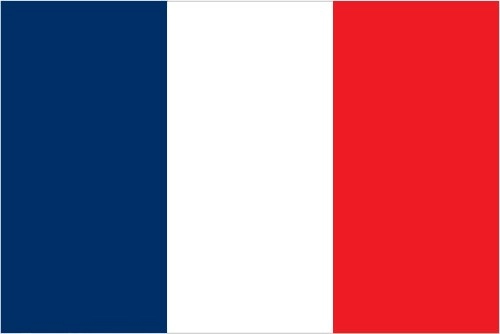
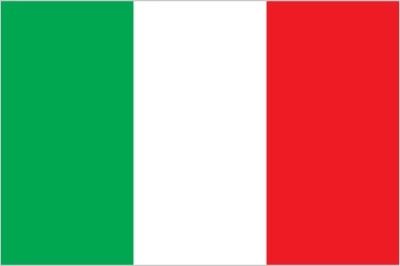
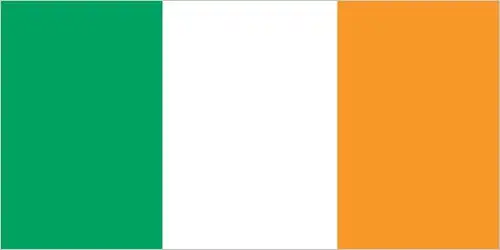
- France uses blue, white, and red; Italy uses green, white, and red; Ireland uses green, white, and orange.
- France and Italy share the color red, but France has blue on the hoist while Italy has green.
- Italy and Ireland share green and white, but Italy's third color is red while Ireland's is orange — Irish orange is noticeably warmer and lighter than Italian red.
- France's flag has a 2:3 ratio, Italy's is 2:3, and Ireland's is 1:2 — Ireland's flag is visibly longer relative to its height.
- All three flags have different adoption dates: France 1794 (re-adopted 1830), Italy 1797 (current form 1948), Ireland 1848 (first introduced) and 1937 (officially adopted).
Similarities
- All three flags use three equal vertical stripes of equal width.
- None of them feature any coat of arms, seal, or emblem.
- All three were inspired, directly or indirectly, by the French Revolutionary Tricolore.
- All three carry meanings tied to liberty, unity, and national rebirth.
- All three are extremely well-known internationally and frequently confused at small sizes.
Why Do France and Italy Flags Look So Similar?
The vertical tricolor format was popularized by the French Revolution. After 1789, French revolutionary armies carried the blue-white-red Tricolore across Europe, and republics that allied with or were inspired by France adopted the format. The first Italian tricolor was raised in 1797 by the Cispadane Republic, a French-aligned state in northern Italy, deliberately echoing the French model but substituting green (often said to honor Milan's civic guard) for blue. Ireland's tricolor was introduced in 1848 by Irish nationalists who also drew on the French Revolutionary tradition: green for the Gaelic Catholic majority, orange for the Protestant minority (in honor of William of Orange), and white between them representing peace between the two communities. The shared format reflects a shared political idea — that a tricolor of equal stripes represents a sovereign people rather than a monarch.
History of the French Flag
The French Tricolore was created in 1789, when the colors of Paris (blue and red) were combined with the royal white. It was officially adopted as the national flag in 1794. After the Bourbon Restoration (1815–1830), the flag was replaced with the white royal banner, but it returned permanently after the July Revolution of 1830. The current shades were standardized in 1976, then darkened again in 2020 under President Macron, who restored a deeper navy blue closer to the post-Revolution original. The Tricolore has been the inspiration for dozens of flags worldwide.
History of the Italian Flag
The Italian Tricolore was first raised on January 7, 1797, in Reggio Emilia by the short-lived Cispadane Republic, making it one of the oldest national tricolors in continuous use. The green-white-red combination passed through several Italian states and was adopted by the Kingdom of Italy in 1861 — initially with the Savoy royal arms in the center. After Italy became a republic in 1946, the coat of arms was removed, and the plain tricolor was officially adopted by the Italian Constitution on January 1, 1948.
History of the Irish Flag
The Irish tricolor was first presented in 1848 by Thomas Francis Meagher, who received it as a gift from a group of French women supporting Irish independence. The flag was modeled directly on the French Tricolore. It saw little use until the 1916 Easter Rising, when it was flown over the General Post Office in Dublin by republicans. After Irish independence, the tricolor was used unofficially throughout the 1920s and 1930s and was formally enshrined as the national flag in the 1937 Constitution of Ireland.
Color Comparison
France Flag Colors
Italy Flag Colors
Ireland Flag Colors
Fun Facts
- Italy's green stripe was reportedly chosen because it was the color of the Lombard Legion's uniforms in 1796.
- The Irish flag must always be flown with green at the hoist — flying it reversed (orange at the hoist) is considered a serious breach of protocol.
- France famously revised its flag to a darker navy blue in 2020 to evoke the original Revolutionary Tricolore.
- Côte d'Ivoire's flag is essentially the Irish flag reversed (orange-white-green), which has caused real-world mix-ups at sporting events.
- Mexico's flag is also a green-white-red vertical tricolor and is often confused with Italy's, distinguished only by its central coat of arms.
Frequently Asked Questions
Why do France and Italy flags look alike?
The vertical tricolor format was popularized by the French Revolution. After 1789, French revolutionary armies carried the blue-white-red Tricolore across Europe, and republics that allied with or were inspired by France adopted the format. The first Italian tricolor was raised in 1797 by the Cispadane Republic, a French-aligned state in northern Italy, deliberately echoing the French model but substituting green (often said to honor Milan's civic guard) for blue. Ireland's tricolor was introduced in 1848 by Irish nationalists who also drew on the French Revolutionary tradition: green for the Gaelic Catholic majority, orange for the Protestant minority (in honor of William of Orange), and white between them representing peace between the two communities. The shared format reflects a shared political idea — that a tricolor of equal stripes represents a sovereign people rather than a monarch.
What is the difference between the France and Italy flag?
- France uses blue, white, and red; Italy uses green, white, and red; Ireland uses green, white, and orange.
- France and Italy share the color red, but France has blue on the hoist while Italy has green.
- Italy and Ireland share green and white, but Italy's third color is red while Ireland's is orange — Irish orange is noticeably warmer and lighter than Italian red.
- France's flag has a 2:3 ratio, Italy's is 2:3, and Ireland's is 1:2 — Ireland's flag is visibly longer relative to its height.
- All three flags have different adoption dates: France 1794 (re-adopted 1830), Italy 1797 (current form 1948), Ireland 1848 (first introduced) and 1937 (officially adopted).
Are the France and Italy flags the same?
No, while they look very similar, the flags of France and Italy have distinct differences. France uses blue, white, and red; Italy uses green, white, and red; Ireland uses green, white, and orange.
Can You Tell Them Apart?
Test your flag knowledge with our interactive quiz!
Play Flag Quiz →Other Similar Flags
Italy vs Mexico
Italy and Mexico flags both have green, white, and red vertical stripes. The key difference? Mexico adds its coat of arms. Compare their full history and meaning.
Ireland vs Côte d'Ivoire
Ireland and Ivory Coast (Côte d'Ivoire) flags both feature green, white, and orange vertical stripes — but reversed. Learn the differences and history.
Chad vs Romania
Chad and Romania have nearly identical flags — both feature blue, yellow, and red vertical stripes. Discover the differences, history, and why they look so alike.