India vs Pakistan Flag
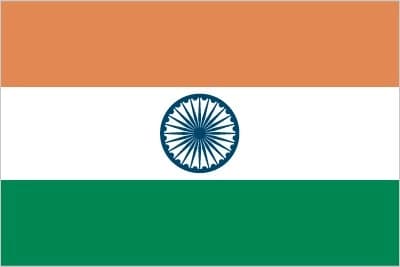
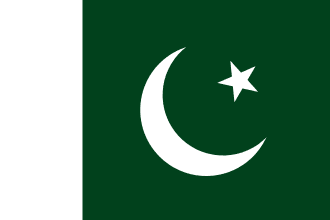
The flags of India and Pakistan emerged from the same historical moment — the Partition of British India in August 1947 — and yet they look completely different. India's flag is a horizontal tricolor of saffron, white, and green with a navy-blue Ashoka Chakra (24-spoked wheel) in the center. Pakistan's flag is a dark-green field with a white crescent and five-pointed star, accompanied by a vertical white stripe along the hoist. Both flags were adopted in the days surrounding independence in August 1947 and are deeply tied to each country's founding identity. This entry focuses entirely on flag design and history — not on the political or military disputes between the two countries.
Key Differences
- India's flag is a horizontal tricolor (saffron, white, green) with a navy-blue 24-spoke Ashoka Chakra in the center; Pakistan's flag is a dark green field with a white crescent, white star, and a white vertical stripe at the hoist.
- India's flag uses saffron, white, and dark green; Pakistan's uses dark green and white only.
- India's central emblem is the Ashoka Chakra (an ancient Buddhist wheel symbol); Pakistan's central emblem is a crescent and five-pointed star (a traditional symbol of Islam).
- India's flag was adopted on July 22, 1947 (just before independence on August 15); Pakistan's flag was adopted on August 11, 1947 (three days before independence on August 14).
- India's flag has a 2:3 ratio; Pakistan's flag also has a 2:3 ratio, but the white hoist stripe on Pakistan's flag is one-quarter of the total width.
Similarities
- Both flags use green as a major color.
- Both flags include white as a secondary color.
- Both flags were adopted within weeks of each other in 1947, just before each nation's independence from Britain.
- Both flags carry strict national flag codes governing display, sizes, and protocol.
- Both flags emerged from the broader 20th-century South Asian independence movement.
Why Do India and Pakistan Flags Look So Similar?
Despite differences in design, the flags of India and Pakistan are inseparable in any historical or cultural discussion of South Asia. They were both designed and adopted in the same week of August 1947 as new symbols for two newly independent nations. The shared use of green and white is no coincidence — green has historic roots across South Asian Islamic banners and the Indian independence movement alike, while white was chosen by both as a unifying color. People search for these flags together because India and Pakistan are inevitably compared as neighbors, cricket rivals, and post-Partition successor states. This comparison treats both flags as serious national symbols with rich design histories, not political markers.
History of the Indian Flag
India's flag was adopted by the Constituent Assembly on July 22, 1947, just weeks before independence on August 15. The design was based on the Indian National Congress's swaraj flag (which featured a spinning wheel) but replaced the spinning wheel with the Ashoka Chakra — a 24-spoked wheel taken from the Lion Capital of Ashoka, an ancient pillar erected by the Buddhist Mauryan emperor Ashoka in the 3rd century BCE. Saffron, white, and green were retained from the Congress flag, but their meanings were officially reinterpreted as courage and sacrifice (saffron), peace and truth (white), and faith and chivalry (green). Indian flag law (the Flag Code of India) was modernized in 2002 to permit citizens to fly the flag year-round.
History of the Pakistani Flag
Pakistan's flag was designed by Amiruddin Kidwai, based on a flag of the All-India Muslim League. It was officially adopted on August 11, 1947, three days before Pakistan's independence on August 14. The dark green field and white crescent and star draw on traditional Islamic flag symbolism, while the vertical white stripe along the hoist (added at the suggestion of the Muslim League) was introduced specifically to represent Pakistan's religious minorities. Together, the green field and white stripe symbolize a country with a Muslim majority and protected minority communities, according to the original design statement.
Color Comparison
India Flag Colors
Pakistan Flag Colors
Fun Facts
- The Ashoka Chakra on India's flag has exactly 24 spokes, taken directly from the Lion Capital of Ashoka pillar at Sarnath.
- Pakistan's flag was officially flown for the first time at the inaugural session of the Pakistan Constituent Assembly on August 11, 1947 — three days before independence.
- Both flags are required by law to be made of khadi (in India) or specified materials (in Pakistan) for official flags raised at government buildings.
- Until 2002, Indian citizens were not legally allowed to fly the flag at home year-round — a court case by industrialist Naveen Jindal changed the rule.
- The two flags are often displayed side by side at international cricket matches, especially during India-Pakistan games — among the most-watched sporting events in the world.
Frequently Asked Questions
Why do India and Pakistan flags look alike?
Despite differences in design, the flags of India and Pakistan are inseparable in any historical or cultural discussion of South Asia. They were both designed and adopted in the same week of August 1947 as new symbols for two newly independent nations. The shared use of green and white is no coincidence — green has historic roots across South Asian Islamic banners and the Indian independence movement alike, while white was chosen by both as a unifying color. People search for these flags together because India and Pakistan are inevitably compared as neighbors, cricket rivals, and post-Partition successor states. This comparison treats both flags as serious national symbols with rich design histories, not political markers.
What is the difference between the India and Pakistan flag?
- India's flag is a horizontal tricolor (saffron, white, green) with a navy-blue 24-spoke Ashoka Chakra in the center; Pakistan's flag is a dark green field with a white crescent, white star, and a white vertical stripe at the hoist.
- India's flag uses saffron, white, and dark green; Pakistan's uses dark green and white only.
- India's central emblem is the Ashoka Chakra (an ancient Buddhist wheel symbol); Pakistan's central emblem is a crescent and five-pointed star (a traditional symbol of Islam).
- India's flag was adopted on July 22, 1947 (just before independence on August 15); Pakistan's flag was adopted on August 11, 1947 (three days before independence on August 14).
- India's flag has a 2:3 ratio; Pakistan's flag also has a 2:3 ratio, but the white hoist stripe on Pakistan's flag is one-quarter of the total width.
Are the India and Pakistan flags the same?
No, while they look very similar, the flags of India and Pakistan have distinct differences. India's flag is a horizontal tricolor (saffron, white, green) with a navy-blue 24-spoke Ashoka Chakra in the center; Pakistan's flag is a dark green field with a white crescent, white star, and a white vertical stripe at the hoist.
Can You Tell Them Apart?
Test your flag knowledge with our interactive quiz!
Play Flag Quiz →Other Similar Flags
India vs Niger
India and Niger flags both feature orange/saffron, white, and green horizontal stripes with a circle in the center. Compare their differences and origins.
Pakistan vs Turkey
Pakistan and Turkey flags both feature a white crescent and star — Pakistan on green, Turkey on red. Compare their Islamic symbolism, design differences, and history.
Japan vs Bangladesh
Japan and Bangladesh flags both feature a circle on a solid background — red on white and red on green. Compare their design, symbolism, and history.