Pakistan vs Turkey Flag
By Mohamadou Moctar · Last updated
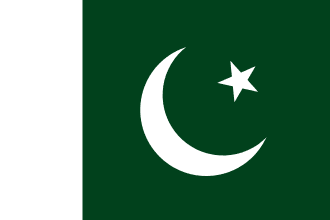
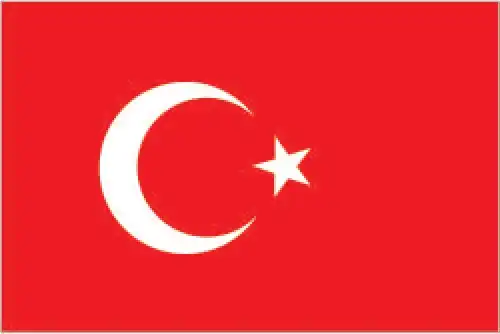
Pakistan and Turkey's flags both prominently feature a white crescent moon and star, symbols widely associated with Islam. Pakistan's crescent and star sit on a dark green background with a white vertical stripe on the hoist side, while Turkey's are on a solid red background. Despite the shared symbolism, the two flags have different historical origins: Turkey's design descends from the Ottoman Empire, while Pakistan's was created for the newly independent Muslim state in 1947.
Key Differences
- Pakistan's background is dark green with a white vertical stripe on the hoist side; Turkey's background is entirely red.
- Pakistan's crescent is thicker and more open; Turkey's crescent is thinner and more elongated.
- Pakistan has a white stripe occupying one-quarter of the flag (representing religious minorities); Turkey has no such stripe.
- Pakistan's green represents Islam and the Muslim majority; Turkey's red represents the blood of martyrs.
- Pakistan's flag was adopted in 1947; Turkey's design dates to the 1790s.
Similarities
- Both feature a white crescent moon and five-pointed star.
- Both flags are associated with Muslim-majority nations.
- Both crescents open toward the fly (right) side of the flag.
- Both flags use the crescent and star as a central, iconic design element.
Why Do Pakistan and Turkey Flags Look So Similar?
The crescent and star became associated with Islam through the Ottoman Empire, which used the symbol extensively from the 18th century onward. When Pakistan was created in 1947 as a homeland for Muslims of British India, the founders chose the crescent and star to represent the new nation's Islamic identity. Turkey's flag is a direct descendant of the Ottoman imperial banner. While the crescent-and-star predates Islam (it was used in ancient Byzantium), the Ottoman adoption made it the most recognized symbol of the Muslim world, influencing flags from Pakistan to Algeria to Malaysia.
History of the Pakistani Flag
Pakistan's flag was designed by Syed Amir-uddin Kedwaii and adopted on August 11, 1947, three days before independence. It is based on the flag of the All-India Muslim League, which featured a white crescent and star on green. The white stripe was added to represent Pakistan's religious minorities (Hindus, Christians, Sikhs, and others), symbolizing their place in the new nation. The dark green represents the Muslim majority and Islam, while the crescent represents progress and the star represents light and knowledge.
History of the Turkish Flag
Turkey's flag, the Ay Yıldız (Moon Star), has origins in the late Ottoman period. The red flag with white crescent has been used since the 1790s. Legend attributes the design to a vision after the Battle of Kosovo in 1389, where a crescent and star appeared reflected in a pool of blood, though historians debate this. The Republic of Turkey retained the flag after its founding in 1923, and the current specifications were standardized by law in 1936.
Color Comparison
Pakistan Flag Colors
Turkey Flag Colors
Fun Facts
- The crescent and star symbol actually predates Islam. It was used by ancient Byzantium (modern Istanbul) centuries before the Ottoman conquest.
- Pakistan's white stripe specifically guarantees representation for non-Muslim minorities, a unique feature among crescent-and-star flags.
- Turkey and Pakistan have historically strong diplomatic relations, sometimes called a 'brotherly' bond, partly reflected in their shared flag symbolism.
- At least 15 countries use some form of crescent and/or star on their flags, forming the largest 'flag symbol family' in the world.
- Algeria, Tunisia, Libya, Mauritania, and the Maldives all use crescent-and-star designs influenced by the same Ottoman tradition.
Frequently Asked Questions
Why do Pakistan and Turkey flags look alike?
The crescent and star became associated with Islam through the Ottoman Empire, which used the symbol extensively from the 18th century onward. When Pakistan was created in 1947 as a homeland for Muslims of British India, the founders chose the crescent and star to represent the new nation's Islamic identity. Turkey's flag is a direct descendant of the Ottoman imperial banner. While the crescent-and-star predates Islam (it was used in ancient Byzantium), the Ottoman adoption made it the most recognized symbol of the Muslim world, influencing flags from Pakistan to Algeria to Malaysia.
What is the difference between the Pakistan and Turkey flag?
- Pakistan's background is dark green with a white vertical stripe on the hoist side; Turkey's background is entirely red.
- Pakistan's crescent is thicker and more open; Turkey's crescent is thinner and more elongated.
- Pakistan has a white stripe occupying one-quarter of the flag (representing religious minorities); Turkey has no such stripe.
- Pakistan's green represents Islam and the Muslim majority; Turkey's red represents the blood of martyrs.
- Pakistan's flag was adopted in 1947; Turkey's design dates to the 1790s.
Are the Pakistan and Turkey flags the same?
No, while they look very similar, the flags of Pakistan and Turkey have distinct differences. Pakistan's background is dark green with a white vertical stripe on the hoist side; Turkey's background is entirely red.
Can You Tell Them Apart?
Test your flag knowledge with our interactive quiz!
Play Flag Quiz →Other Similar Flags
Turkey vs Tunisia
Turkey and Tunisia flags both feature a crescent and star on a red background. Compare the design differences, Ottoman heritage, and symbolism.
Qatar vs Bahrain
Qatar and Bahrain flags both feature a serrated white-and-maroon/red design. Learn the differences in color, points, and proportions.
Chad vs Romania
Chad and Romania have nearly identical flags: blue, yellow, and red vertical stripes. Discover the differences, history, and why they look so alike.
Further reading on Wikipedia: Flag of Pakistan, Flag of Turkey