Turkey vs Tunisia Flag
By Mohamadou Moctar · Last updated
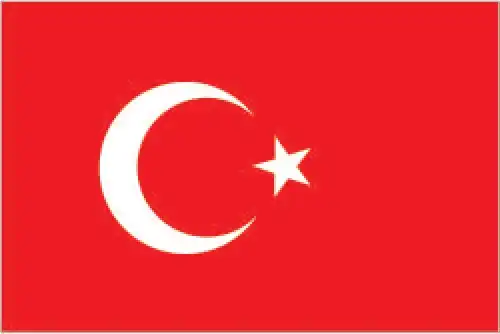
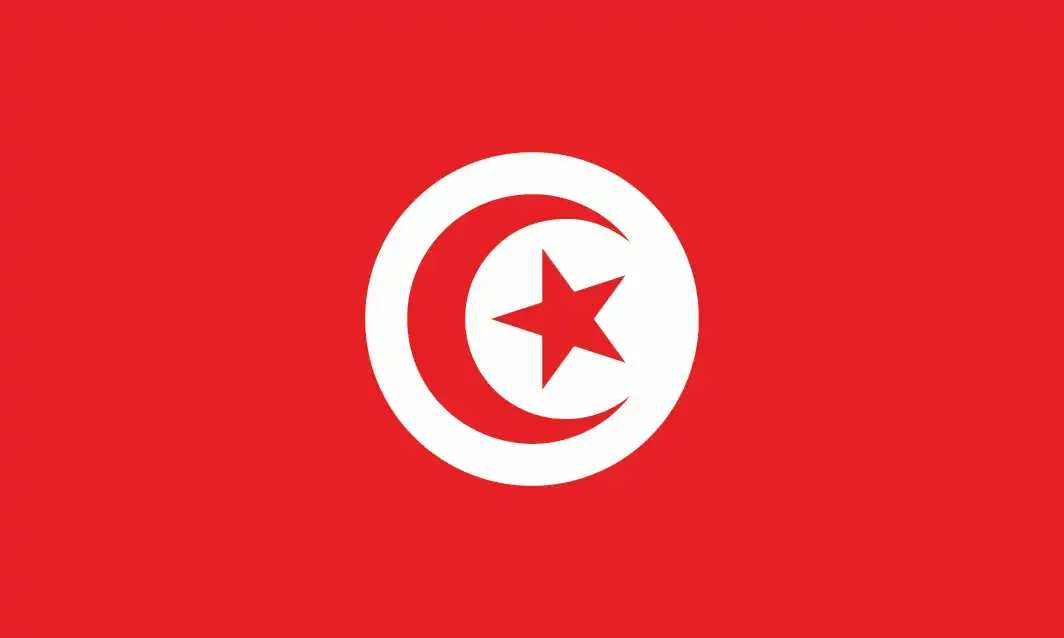
Turkey and Tunisia's flags are remarkably similar. Both feature a white crescent and star on a red background. The resemblance stems from their shared Ottoman heritage: both were part of the Ottoman Empire, which used the crescent and star as its symbol. Despite the common origin, the two flags have distinct design details.
Key Differences
- Tunisia's crescent and star are enclosed in a white circle (disc) on the red field; Turkey's are directly on the red.
- Turkey's crescent is thinner and more elongated; Tunisia's is thicker and more rounded.
- Turkey's star has 5 points; Tunisia's also has 5 points but is positioned inside the crescent.
- Turkey's red is darker (Turkish red); Tunisia's is a brighter red.
- Turkey's flag ratio is 2:3; Tunisia's is also 2:3 but the design proportions differ.
Similarities
- Both feature a white crescent and star on a red background.
- Both derive from the Ottoman Empire's flag tradition.
- Both use red as the primary background color.
- Both crescent-and-star designs face the same direction (opening to the right).
Why Do Turkey and Tunisia Flags Look So Similar?
Both flags trace their origins to the Ottoman Empire, which ruled Turkey (as its center) and Tunisia (as a province) for centuries. The crescent and star became the Ottoman symbol in the 18th century and was inherited by many successor and former vassal states. Turkey's flag is a direct evolution of the Ottoman flag, while Tunisia adopted its version during Ottoman rule (the flag dates to 1831 under the Husainid dynasty). The shared imperial heritage explains the design similarity.
History of the Turkish Flag
Turkey's flag, known as 'Ay Yıldız' (Moon Star), has origins in the late Ottoman period. The red flag with white crescent was used by the Ottoman Empire from the 18th century. After the Republic of Turkey was established in 1923, the flag was retained. Legend holds that the crescent and star appeared reflected in a pool of blood after the Battle of Kosovo (1389), though historians debate this. The current specifications were standardized by law in 1936.
History of the Tunisian Flag
Tunisia's flag was adopted in 1831 by the Husainid Bey, Al-Husayn II ibn Mahmud, and formalized after independence from France in 1959. The white disc in the center was added to distinguish it from the Ottoman flag. The crescent and star within the disc represent Islam, Tunisia's connection to the Ottoman world, and the country's identity. The red background has been associated with the Hafsid dynasty (13th–16th century).
Color Comparison
Turkey Flag Colors
Tunisia Flag Colors
Fun Facts
- The crescent and star are often associated with Islam, but they were actually Ottoman symbols adopted before becoming Islamic motifs.
- Algeria, Libya (pre-2011), Pakistan, and several other Muslim-majority countries also use crescent-and-star designs.
- Turkey's flag is one of the oldest unchanged national flags, with the design dating to the 1790s.
- Tunisia's flag was reportedly inspired by a dream of the Husainid Bey where he saw a white disc with a crescent on a red banner.
Frequently Asked Questions
Why do Turkey and Tunisia flags look alike?
Both flags trace their origins to the Ottoman Empire, which ruled Turkey (as its center) and Tunisia (as a province) for centuries. The crescent and star became the Ottoman symbol in the 18th century and was inherited by many successor and former vassal states. Turkey's flag is a direct evolution of the Ottoman flag, while Tunisia adopted its version during Ottoman rule (the flag dates to 1831 under the Husainid dynasty). The shared imperial heritage explains the design similarity.
What is the difference between the Turkey and Tunisia flag?
- Tunisia's crescent and star are enclosed in a white circle (disc) on the red field; Turkey's are directly on the red.
- Turkey's crescent is thinner and more elongated; Tunisia's is thicker and more rounded.
- Turkey's star has 5 points; Tunisia's also has 5 points but is positioned inside the crescent.
- Turkey's red is darker (Turkish red); Tunisia's is a brighter red.
- Turkey's flag ratio is 2:3; Tunisia's is also 2:3 but the design proportions differ.
Are the Turkey and Tunisia flags the same?
No, while they look very similar, the flags of Turkey and Tunisia have distinct differences. Tunisia's crescent and star are enclosed in a white circle (disc) on the red field; Turkey's are directly on the red.
Can You Tell Them Apart?
Test your flag knowledge with our interactive quiz!
Play Flag Quiz →Other Similar Flags
Indonesia vs Monaco
Indonesia and Monaco flags are nearly identical: red over white horizontal stripes. Learn the key differences in dimensions, history, and meaning.
Chad vs Romania
Chad and Romania have nearly identical flags: blue, yellow, and red vertical stripes. Discover the differences, history, and why they look so alike.
Qatar vs Bahrain
Qatar and Bahrain flags both feature a serrated white-and-maroon/red design. Learn the differences in color, points, and proportions.
Further reading on Wikipedia: Flag of Turkey, Flag of Tunisia