Argentina vs Uruguay Flag
By Mohamadou Moctar · Last updated
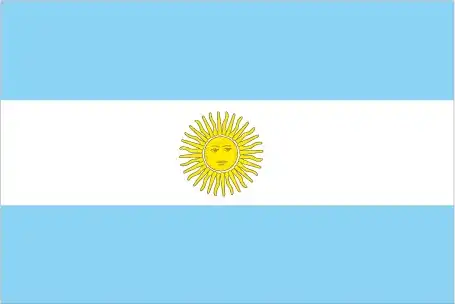
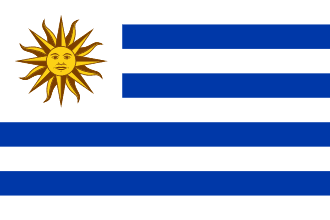
Argentina and Uruguay's flags are strikingly similar. Both feature horizontal blue and white stripes with the iconic Sun of May (Sol de Mayo) in the center. The resemblance reflects their deeply intertwined history: both were part of the Viceroyalty of the Río de la Plata and fought together for independence from Spain. The Sun of May appears on both flags as a symbol of their shared revolutionary heritage.
Key Differences
- Argentina has three stripes (blue-white-blue); Uruguay has nine stripes (five white, four blue).
- Argentina's Sun of May is centered on the white stripe; Uruguay's is in the white canton (upper-left corner).
- Argentina's sun has a face with 32 rays (16 straight, 16 wavy); Uruguay's sun also has a face but with 16 rays (8 straight, 8 wavy).
- Uruguay's flag ratio is 2:3; Argentina's is 9:14.
- Argentina's blue is a lighter sky blue (celeste); Uruguay's stripes alternate in a similar shade.
Similarities
- Both feature blue (celeste) and white horizontal stripes.
- Both display the Sun of May (Sol de Mayo), a golden sun with a human face.
- Both flags symbolize independence from Spain in the early 19th century.
- Both use the same shade of light blue (celeste), reflecting their shared Río de la Plata heritage.
Why Do Argentina and Uruguay Flags Look So Similar?
Argentina and Uruguay share the same revolutionary origin. Both were part of the Spanish Viceroyalty of the Río de la Plata, and both fought for independence in the early 1800s. The Sun of May on both flags commemorates the May Revolution of 1810 in Buenos Aires, when clouds parted to reveal the sun. This was seen as a divine sign of approval for independence. Uruguay was originally the Banda Oriental province of the Río de la Plata before becoming independent in 1828. The shared blue-white color scheme and the Sol de Mayo directly reflect this common heritage.
History of the Argentine Flag
Argentina's flag was created by Manuel Belgrano on February 27, 1812, during the Argentine War of Independence. He designed the light blue and white stripes inspired by the cockade of the May Revolution. The Sun of May was added to the flag in 1818. The sun features a human face (the Inca sun god Inti) with 32 alternating straight and wavy rays. The flag was officially adopted on July 20, 1816, the same year Argentina declared independence.
History of the Uruguayan Flag
Uruguay's flag was adopted on July 11, 1830, shortly after the country gained independence in 1828 through the Treaty of Montevideo. The nine stripes represent the nine original departments of Uruguay. The design was influenced by both the Argentine flag (blue-white-sun motif) and the American flag (multiple stripes). The Sun of May in the canton links Uruguay to the broader Río de la Plata independence movement. The flag has remained unchanged since its adoption.
Color Comparison
Argentina Flag Colors
Uruguay Flag Colors
Fun Facts
- The Sun of May on both flags has a human face, representing Inti, the Inca sun god worshipped across South America.
- Uruguay's 9 stripes represent its 9 original departments, while Argentina's 3 stripes have no numerical significance.
- During football matches between Argentina and Uruguay, the sea of blue-and-white flags in the stadium makes it nearly impossible to tell which fans are which.
- The phrase 'Río de la Plata' means 'River of Silver.' Both countries were named after the river's promise of precious metals.
- Greece's flag (blue and white stripes with a cross) adds another country to the blue-and-white flag family.
Frequently Asked Questions
Why do Argentina and Uruguay flags look alike?
Argentina and Uruguay share the same revolutionary origin. Both were part of the Spanish Viceroyalty of the Río de la Plata, and both fought for independence in the early 1800s. The Sun of May on both flags commemorates the May Revolution of 1810 in Buenos Aires, when clouds parted to reveal the sun. This was seen as a divine sign of approval for independence. Uruguay was originally the Banda Oriental province of the Río de la Plata before becoming independent in 1828. The shared blue-white color scheme and the Sol de Mayo directly reflect this common heritage.
What is the difference between the Argentina and Uruguay flag?
- Argentina has three stripes (blue-white-blue); Uruguay has nine stripes (five white, four blue).
- Argentina's Sun of May is centered on the white stripe; Uruguay's is in the white canton (upper-left corner).
- Argentina's sun has a face with 32 rays (16 straight, 16 wavy); Uruguay's sun also has a face but with 16 rays (8 straight, 8 wavy).
- Uruguay's flag ratio is 2:3; Argentina's is 9:14.
- Argentina's blue is a lighter sky blue (celeste); Uruguay's stripes alternate in a similar shade.
Are the Argentina and Uruguay flags the same?
No, while they look very similar, the flags of Argentina and Uruguay have distinct differences. Argentina has three stripes (blue-white-blue); Uruguay has nine stripes (five white, four blue).
Can You Tell Them Apart?
Test your flag knowledge with our interactive quiz!
Play Flag Quiz →Other Similar Flags
Colombia vs Ecuador
Colombia, Ecuador, and Venezuela flags all share yellow-blue-red stripes from Gran Colombia. Compare their differences, shared history, and symbolism.
Chad vs Romania
Chad and Romania have nearly identical flags: blue, yellow, and red vertical stripes. Discover the differences, history, and why they look so alike.
Australia vs New Zealand
Australia and New Zealand flags both feature the Union Jack and Southern Cross on a blue background. Compare the key differences, history, and symbolism.
Further reading on Wikipedia: Flag of Argentina, Flag of Uruguay