Colombia vs Ecuador vs Venezuela Flag
By Mohamadou Moctar · Last updated
Colombia, Ecuador, and Venezuela all share flags with yellow, blue, and red horizontal stripes, and that's not a coincidence. All three were part of Gran Colombia (1819–1831), a republic founded by Simón Bolívar. When Gran Colombia dissolved, each successor state kept the tricolor with modifications, creating three distinct but clearly related flags.

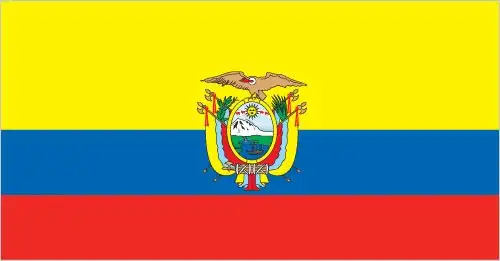
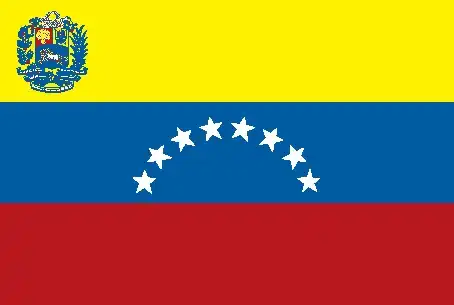
Key Differences
- Colombia's flag has a large yellow stripe (half the flag) with blue and red each taking a quarter, and no emblem.
- Ecuador has the same proportions as Colombia but adds its coat of arms in the center.
- Venezuela has three equal stripes and features an arc of eight stars in the center plus the coat of arms in the canton.
- Colombia and Ecuador's yellow stripe is double the width of the other stripes; Venezuela's stripes are all equal.
Similarities
- All three use yellow, blue, and red horizontal stripes.
- All three derive from the Gran Colombian flag designed by Francisco de Miranda.
- All three gained independence from Spain in the early 19th century.
- The colors in all three represent similar values: yellow for gold/wealth, blue for seas/sky, red for blood/courage.
Why Do Colombia and Ecuador Flags Look So Similar?
Francisco de Miranda, a Venezuelan revolutionary, designed the original yellow-blue-red tricolor around 1801, inspired by his conversations with Johann Wolfgang von Goethe about primary colors. This flag was adopted by Gran Colombia in 1819, a republic uniting modern-day Colombia, Ecuador, Venezuela, and Panama under Simón Bolívar. When Gran Colombia dissolved in 1831, all successor states retained variations of Miranda's tricolor as a tribute to their shared independence struggle.
History of the Colombian Flag
Colombia's flag was officially adopted on November 26, 1861, though the yellow-blue-red design had been in use since independence. The large yellow stripe (occupying the top half) distinguishes it from the other Bolivarian flags. Colombia is the only one of the three to use the plain tricolor without any emblem, making it the closest to Miranda's original design.
History of the Ecuadorian Flag
Ecuador adopted its current flag on September 26, 1860. It uses the same yellow-blue-red design with the larger yellow stripe, identical in proportions to Colombia's flag. Ecuador's coat of arms, added to the center, depicts Mount Chimborazo, a river, a steamship, and a condor, representing the country's geography and aspirations. The coat of arms is the primary way to distinguish it from Colombia's flag.
History of the Venezuelan Flag
Venezuela's flag was adopted on March 12, 2006, in its current form, though the yellow-blue-red tricolor dates to 1811. Unlike Colombia and Ecuador, Venezuela uses three equal-width stripes. The flag features an arc of eight stars (added in 2006, representing eight provinces that supported independence) and the national coat of arms in the upper-left corner. Venezuela's flag has undergone more modifications than its Bolivarian siblings.
Color Comparison
Colombia Flag Colors
Ecuador Flag Colors
Venezuela Flag Colors
Fun Facts
- Francisco de Miranda reportedly chose yellow, blue, and red after a conversation with Goethe about the theory of primary colors.
- Panama, which was part of Gran Colombia until 1903, abandoned the tricolor entirely for a different flag design.
- Without their coats of arms, Colombia and Ecuador's flags would be virtually identical.
- Venezuela's flag is the only one of the three with equal-width stripes.
- The original Gran Colombian flag was first raised in Haiti in 1806 during Miranda's failed invasion of Venezuela.
Frequently Asked Questions
Why do Colombia and Ecuador flags look alike?
Francisco de Miranda, a Venezuelan revolutionary, designed the original yellow-blue-red tricolor around 1801, inspired by his conversations with Johann Wolfgang von Goethe about primary colors. This flag was adopted by Gran Colombia in 1819, a republic uniting modern-day Colombia, Ecuador, Venezuela, and Panama under Simón Bolívar. When Gran Colombia dissolved in 1831, all successor states retained variations of Miranda's tricolor as a tribute to their shared independence struggle.
What is the difference between the Colombia and Ecuador flag?
- Colombia's flag has a large yellow stripe (half the flag) with blue and red each taking a quarter, and no emblem.
- Ecuador has the same proportions as Colombia but adds its coat of arms in the center.
- Venezuela has three equal stripes and features an arc of eight stars in the center plus the coat of arms in the canton.
- Colombia and Ecuador's yellow stripe is double the width of the other stripes; Venezuela's stripes are all equal.
Are the Colombia and Ecuador flags the same?
No, while they look very similar, the flags of Colombia and Ecuador have distinct differences. Colombia's flag has a large yellow stripe (half the flag) with blue and red each taking a quarter, and no emblem.
Can You Tell Them Apart?
Test your flag knowledge with our interactive quiz!
Play Flag Quiz →Other Similar Flags
Chad vs Romania
Chad and Romania have nearly identical flags: blue, yellow, and red vertical stripes. Discover the differences, history, and why they look so alike.
Netherlands vs Luxembourg
The Netherlands and Luxembourg flags both have red, white, and blue horizontal stripes. Learn how to tell them apart and their different origins.
Senegal vs Mali
Senegal and Mali flags share the same green-yellow-red vertical stripes. The only difference? Senegal has a green star. Compare their history and symbolism.
Further reading on Wikipedia: Flag of Colombia, Flag of Ecuador, Flag of Venezuela