Brazil vs Portugal Flag
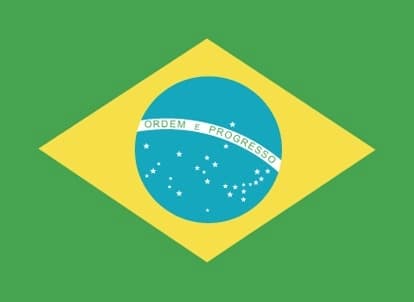
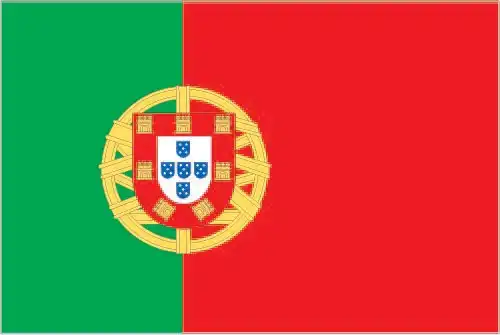
The flags of Brazil and Portugal share a deeply intertwined colonial history but look very different. Brazil's Auriverde features a green field with a large yellow rhombus, a blue celestial sphere with 27 white stars, and a curved white banner reading 'Ordem e Progresso' ('Order and Progress'). Portugal's flag is a vertical bicolor of green and red with the national coat of arms — featuring an armillary sphere and shield — placed on the dividing line. Both countries share the Portuguese language, centuries of shared history, and a tradition of using green and yellow/gold in national symbolism. The flags are a fascinating case of how a former colony and its former colonial power developed distinct, but visually related, national emblems.
Key Differences
- Brazil's flag is mostly green with a yellow rhombus and a blue celestial sphere; Portugal's flag is a vertical bicolor of green and red with a coat of arms on the divide.
- Brazil's flag uses green, yellow, blue, and white; Portugal's uses green, red, yellow, white, and blue (in the coat of arms).
- Brazil's flag features 27 white stars representing Brazilian states and the Federal District; Portugal's flag features an armillary sphere and the historic shield of Portugal.
- Brazil's flag was adopted on November 19, 1889, days after the proclamation of the Republic; Portugal's flag was adopted on June 30, 1911, after the establishment of the Portuguese First Republic.
- Brazil's stars depict the night sky over Rio de Janeiro on November 15, 1889; Portugal's armillary sphere refers to its global maritime exploration heritage.
- Brazil's aspect ratio is 7:10; Portugal's is 2:3, with the green hoist stripe being narrower (2/5) and the red fly stripe wider (3/5).
Similarities
- Both flags use green as a major color.
- Both flags use yellow/gold in their primary design (the Brazilian rhombus and Portugal's coat of arms).
- Both countries share the Portuguese language and a deeply intertwined colonial history.
- Both flags were adopted shortly after their respective transitions from monarchy to republic.
- Both flags carry strong national symbolism — Brazil's 'Ordem e Progresso' banner across the celestial sphere and Portugal's armillary sphere with the historic shield of the Reconquista.
Why Do Brazil and Portugal Flags Look So Similar?
Brazil and Portugal share more flag DNA than their visual differences suggest. Portugal colonized Brazil from 1500 until 1822, and the two countries continue to share the Portuguese language, vast cultural ties, and even a brief period when the Portuguese royal court relocated to Brazil during the Napoleonic Wars (1808–1821). When Brazil gained independence in 1822, the new Empire of Brazil deliberately retained Portuguese colors — but switched the imperial Portuguese blue and white for green and yellow, supposedly drawn from the House of Braganza (green) and the House of Habsburg (yellow), the dynasties of Brazil's first emperor and empress. When Brazil became a republic in 1889, the green and yellow were kept, the imperial coat of arms was replaced with a starry sphere, and the famous 'Ordem e Progresso' banner was added. Portugal's modern flag — which shifted from the older blue-and-white royal flag to the green-and-red republican flag in 1911 — is therefore a sibling design from the same political family tree.
History of the Brazilian Flag
Brazil's modern flag was adopted on November 19, 1889 — just four days after the proclamation of the Republic ended the Brazilian Empire. The green field and yellow rhombus were retained from the imperial flag (1822–1889), but the imperial coat of arms in the center was replaced with a blue celestial sphere depicting the actual night sky over Rio de Janeiro at 8:30 a.m. on November 15, 1889 — the date the Republic was proclaimed. The 27 white stars represent the 26 Brazilian states plus the Federal District; new stars have been added when new states are created. The white banner across the sphere bears the national motto 'Ordem e Progresso' ('Order and Progress'), inspired by the positivist philosophy of Auguste Comte.
History of the Portuguese Flag
Portugal's current flag was adopted on June 30, 1911, after the 1910 republican revolution that overthrew the Portuguese monarchy. It replaced the older blue-and-white royal flag with green and red — colors associated with the Portuguese Republican Party. The coat of arms in the center includes the traditional Portuguese shield (used since 1143) and is set on a yellow armillary sphere. The armillary sphere — a navigational instrument of nested rings — refers to Portugal's Age of Discovery (15th–17th centuries) and its role as a great seafaring nation. The shield includes five smaller blue shields (the 'quinas') representing the five Moorish kings defeated by Portugal's first king, Afonso I, and a red border with seven gold castles representing fortifications captured from the Moors.
Color Comparison
Brazil Flag Colors
Portugal Flag Colors
Fun Facts
- The 27 stars on Brazil's flag represent the actual constellations visible over Rio de Janeiro at the moment the Republic was proclaimed in 1889 — including the Southern Cross.
- Brazil's national motto 'Ordem e Progresso' was inspired by Auguste Comte's positivist motto: 'Love as a principle and order as the basis; progress as the goal.'
- Portugal is one of only a few European countries to depict an armillary sphere on its flag — a direct reference to its 15th-century Age of Discovery navigators.
- Brazil's empire flag (1822–1889) is the direct ancestor of the modern flag, with only the central emblem changed.
- The seven castles on Portugal's shield commemorate fortifications captured during the Reconquista — Portugal's centuries-long effort to expel the Moors from the Iberian Peninsula.
Frequently Asked Questions
Why do Brazil and Portugal flags look alike?
Brazil and Portugal share more flag DNA than their visual differences suggest. Portugal colonized Brazil from 1500 until 1822, and the two countries continue to share the Portuguese language, vast cultural ties, and even a brief period when the Portuguese royal court relocated to Brazil during the Napoleonic Wars (1808–1821). When Brazil gained independence in 1822, the new Empire of Brazil deliberately retained Portuguese colors — but switched the imperial Portuguese blue and white for green and yellow, supposedly drawn from the House of Braganza (green) and the House of Habsburg (yellow), the dynasties of Brazil's first emperor and empress. When Brazil became a republic in 1889, the green and yellow were kept, the imperial coat of arms was replaced with a starry sphere, and the famous 'Ordem e Progresso' banner was added. Portugal's modern flag — which shifted from the older blue-and-white royal flag to the green-and-red republican flag in 1911 — is therefore a sibling design from the same political family tree.
What is the difference between the Brazil and Portugal flag?
- Brazil's flag is mostly green with a yellow rhombus and a blue celestial sphere; Portugal's flag is a vertical bicolor of green and red with a coat of arms on the divide.
- Brazil's flag uses green, yellow, blue, and white; Portugal's uses green, red, yellow, white, and blue (in the coat of arms).
- Brazil's flag features 27 white stars representing Brazilian states and the Federal District; Portugal's flag features an armillary sphere and the historic shield of Portugal.
- Brazil's flag was adopted on November 19, 1889, days after the proclamation of the Republic; Portugal's flag was adopted on June 30, 1911, after the establishment of the Portuguese First Republic.
- Brazil's stars depict the night sky over Rio de Janeiro on November 15, 1889; Portugal's armillary sphere refers to its global maritime exploration heritage.
- Brazil's aspect ratio is 7:10; Portugal's is 2:3, with the green hoist stripe being narrower (2/5) and the red fly stripe wider (3/5).
Are the Brazil and Portugal flags the same?
No, while they look very similar, the flags of Brazil and Portugal have distinct differences. Brazil's flag is mostly green with a yellow rhombus and a blue celestial sphere; Portugal's flag is a vertical bicolor of green and red with a coat of arms on the divide.
Can You Tell Them Apart?
Test your flag knowledge with our interactive quiz!
Play Flag Quiz →Other Similar Flags
Spain vs Portugal
Compare Spain's red-and-yellow Rojigualda with Portugal's green-and-red flag — two Iberian flags with shared and divergent histories.
Argentina vs Uruguay
Argentina and Uruguay flags both feature blue and white horizontal stripes with a sun symbol. Compare the Sun of May, stripe count, and shared history.
Italy vs Mexico
Italy and Mexico flags both have green, white, and red vertical stripes. The key difference? Mexico adds its coat of arms. Compare their full history and meaning.