Cameroon vs Guinea vs Mali Flag: Pan-African Color Variations
By Mohamadou Moctar · Last updated
Cameroon, Guinea, and Mali all fly flags featuring vertical stripes in the Pan-African colors: green, yellow, and red. That makes them easy to confuse at a glance. Guinea and Mali use the same three stripes but in reverse order, while Cameroon adds a yellow star in the center. These flags represent the pride of West African independence movements and the shared heritage of the Pan-African movement.
Key Differences
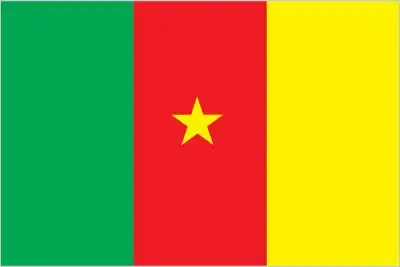
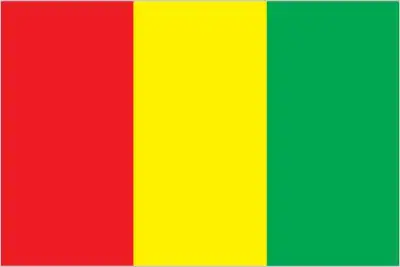
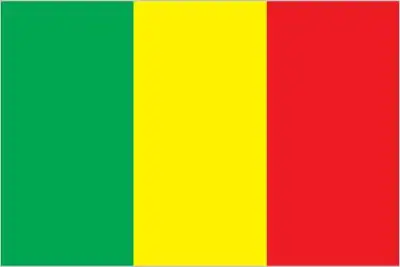
- Cameroon's stripe order is green-red-yellow (left to right) with a yellow star on the red stripe; Guinea's is red-yellow-green; Mali's is green-yellow-red.
- Cameroon has a yellow five-pointed star centered on the red middle stripe; Guinea and Mali have no emblems.
- Guinea's stripes mirror Mali's. They are exact reverses of each other (red-yellow-green vs green-yellow-red).
- Cameroon's flag was adopted in 1975; Guinea's in 1958; Mali's in 1961.
- The shades of green, yellow, and red vary slightly between all three flags.
Similarities
- All three use vertical stripes in green, yellow, and red, the Pan-African colors.
- All three flags were adopted upon or shortly after independence from France.
- All three are West African nations with shared colonial heritage.
- The colors represent similar themes across all three: land, wealth, and sacrifice.
Why Do Cameroon and Guinea Flags Look So Similar?
All three flags draw from the Pan-African color tradition inspired by the Ethiopian flag. Ethiopia is one of the few African nations never colonized by Europeans. Green, yellow (gold), and red became symbols of African independence, pride, and unity. As French West African colonies gained independence in the late 1950s and early 1960s, many adopted these colors. Guinea was the first French African colony to vote for independence (1958), Mali followed in 1960, and Cameroon also in 1960. The shared color palette directly reflects their common Pan-African aspirations.
History of the Cameroonian Flag
Cameroon's current flag was adopted on May 20, 1975, when the country transitioned from a federal to a unitary state. The earlier flag (1961–1975) had two stars on the green stripe representing the two federated states. The green-red-yellow vertical tricolor with a single yellow star reflects Cameroon's unity. Green represents the southern forests, red represents unity, and yellow represents the northern savannas and the sun.
History of the Guinean Flag
Guinea's flag was adopted on November 10, 1958, when Guinea became the first French African colony to vote for independence, rejecting Charles de Gaulle's proposed French Community. President Ahmed Sékou Touré chose the Pan-African colors in the order red-yellow-green, deliberately mirroring the French Tricolore format. Red represents the blood of anti-colonial struggle, yellow represents the sun and mineral wealth (especially gold and bauxite), and green represents the country's lush vegetation.
History of the Malian Flag
Mali's flag was adopted on March 1, 1961, after the original Mali Federation flag was modified. The original featured a black kanaga (stylized human figure) on the yellow stripe, but this was removed because of Islamic opposition to depictions of the human form. The resulting plain tricolor of green-yellow-red uses the Pan-African colors. Mali was briefly part of the Mali Federation with Senegal in 1959–1960 before becoming independent.
Color Comparison
Cameroon Flag Colors
Guinea Flag Colors
Mali Flag Colors
Fun Facts
- Guinea and Mali's flags are exact reverses of each other: red-yellow-green vs green-yellow-red. That makes them a mirror pair.
- Senegal's flag is nearly identical to Mali's but with a green star added. They were once the same country (Mali Federation).
- At least 20 African nations use some combination of green, yellow/gold, and red, the Pan-African colors inspired by Ethiopia.
- Guinea was the only French African colony to vote 'No' in De Gaulle's 1958 referendum. France withdrew all support overnight in retaliation.
- Cameroon's single star earned it the nickname 'L'étoile,' a reference visible on national football jerseys.
Frequently Asked Questions
Why do Cameroon and Guinea flags look alike?
All three flags draw from the Pan-African color tradition inspired by the Ethiopian flag. Ethiopia is one of the few African nations never colonized by Europeans. Green, yellow (gold), and red became symbols of African independence, pride, and unity. As French West African colonies gained independence in the late 1950s and early 1960s, many adopted these colors. Guinea was the first French African colony to vote for independence (1958), Mali followed in 1960, and Cameroon also in 1960. The shared color palette directly reflects their common Pan-African aspirations.
What is the difference between the Cameroon and Guinea flag?
- Cameroon's stripe order is green-red-yellow (left to right) with a yellow star on the red stripe; Guinea's is red-yellow-green; Mali's is green-yellow-red.
- Cameroon has a yellow five-pointed star centered on the red middle stripe; Guinea and Mali have no emblems.
- Guinea's stripes mirror Mali's. They are exact reverses of each other (red-yellow-green vs green-yellow-red).
- Cameroon's flag was adopted in 1975; Guinea's in 1958; Mali's in 1961.
- The shades of green, yellow, and red vary slightly between all three flags.
Are the Cameroon and Guinea flags the same?
No, while they look very similar, the flags of Cameroon and Guinea have distinct differences. Cameroon's stripe order is green-red-yellow (left to right) with a yellow star on the red stripe; Guinea's is red-yellow-green; Mali's is green-yellow-red.
Can You Tell Them Apart?
Test your flag knowledge with our interactive quiz!
Play Flag Quiz →Other Similar Flags
Senegal vs Mali
Senegal and Mali flags share the same green-yellow-red vertical stripes. The only difference? Senegal has a green star. Compare their history and symbolism.
Chad vs Romania
Chad and Romania have nearly identical flags: blue, yellow, and red vertical stripes. Discover the differences, history, and why they look so alike.
Colombia vs Ecuador
Colombia, Ecuador, and Venezuela flags all share yellow-blue-red stripes from Gran Colombia. Compare their differences, shared history, and symbolism.
Further reading on Wikipedia: Flag of Cameroon, Flag of Guinea, Flag of Mali