China vs Vietnam Flag
By Mohamadou Moctar · Last updated
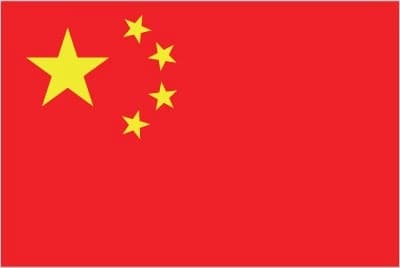
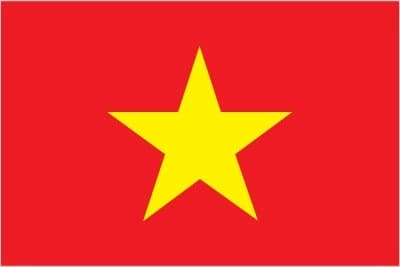
China and Vietnam's flags are among the most commonly confused in the world. Both feature yellow (gold) stars on a vibrant red background. China's flag has one large star accompanied by four smaller stars in the canton, while Vietnam's has a single large five-pointed star centered on the flag. The similarity is no coincidence: both flags represent communist revolutions and share ideological roots.
Key Differences
- China has five stars (one large + four small) in the upper-left corner; Vietnam has one large star centered on the flag.
- China's stars are arranged in an arc pattern in the canton; Vietnam's single star is perfectly centered.
- China's flag ratio is 2:3; Vietnam's is also 2:3 but the visual balance is completely different.
- China's flag was adopted in 1949; Vietnam's current design dates to 1955 (originally 1940).
- China's four small stars represent the four social classes; Vietnam's single star represents the unity of the people.
Similarities
- Both feature yellow/gold stars on a solid red background.
- Both use red to represent communist revolution and the blood of martyrs.
- Both use yellow/gold to represent the bright future of the nation.
- Both were designed during communist revolutionary movements.
Why Do China and Vietnam Flags Look So Similar?
Both flags were born from communist revolutions heavily influenced by Marxist-Leninist ideology. Vietnam's flag was designed in 1940 by Nguyễn Hữu Tiến during the uprising against French colonial rule and Japanese occupation. China's flag was designed in 1949 by Zeng Liansong for the newly established People's Republic. The shared red-and-gold color scheme is a hallmark of communist symbolism worldwide: red representing revolution and the blood of workers, gold representing the bright future. Vietnam's communist movement was directly supported by China, making the visual connection both ideological and historical.
History of the Chinese Flag
China's flag, the Five-star Red Flag (五星红旗), was designed by Zeng Liansong, an economist from Zhejiang province, and selected from nearly 3,000 submissions. It was first raised on October 1, 1949, in Tiananmen Square during the founding ceremony of the People's Republic of China. The large star represents the Communist Party of China, while the four smaller stars represent the four social classes (working class, peasantry, urban petty bourgeoisie, and national bourgeoisie) united under the Party's leadership.
History of the Vietnamese Flag
Vietnam's flag was designed by Nguyễn Hữu Tiến in 1940 and first used during the Southern Uprising against French and Japanese forces. It became the flag of the Viet Minh and was adopted by Ho Chi Minh as the flag of the Democratic Republic of Vietnam on September 2, 1945. After reunification in 1975, it became the flag of the unified Socialist Republic of Vietnam. The original 1940 design had a slightly different star shape, which was refined in 1955.
Color Comparison
China Flag Colors
Vietnam Flag Colors
Fun Facts
- Nearly 3,000 designs were submitted for China's flag. The winning design was modified by Mao Zedong himself, who changed the hammer-and-sickle from the large star.
- Vietnam's flag designer, Nguyễn Hữu Tiến, was executed by the French colonial government in 1941. He never saw his flag become the national symbol.
- The Soviet Union's red flag with hammer and sickle inspired both designs, creating a family of communist red flags worldwide.
- At the 2008 Beijing Olympics, Vietnam's flag was accidentally displayed upside down during a ceremony, though it looks nearly the same either way.
- Both countries celebrate their flag's adoption with national holidays: China on October 1, Vietnam on September 2.
Frequently Asked Questions
Why do China and Vietnam flags look alike?
Both flags were born from communist revolutions heavily influenced by Marxist-Leninist ideology. Vietnam's flag was designed in 1940 by Nguyễn Hữu Tiến during the uprising against French colonial rule and Japanese occupation. China's flag was designed in 1949 by Zeng Liansong for the newly established People's Republic. The shared red-and-gold color scheme is a hallmark of communist symbolism worldwide: red representing revolution and the blood of workers, gold representing the bright future. Vietnam's communist movement was directly supported by China, making the visual connection both ideological and historical.
What is the difference between the China and Vietnam flag?
- China has five stars (one large + four small) in the upper-left corner; Vietnam has one large star centered on the flag.
- China's stars are arranged in an arc pattern in the canton; Vietnam's single star is perfectly centered.
- China's flag ratio is 2:3; Vietnam's is also 2:3 but the visual balance is completely different.
- China's flag was adopted in 1949; Vietnam's current design dates to 1955 (originally 1940).
- China's four small stars represent the four social classes; Vietnam's single star represents the unity of the people.
Are the China and Vietnam flags the same?
No, while they look very similar, the flags of China and Vietnam have distinct differences. China has five stars (one large + four small) in the upper-left corner; Vietnam has one large star centered on the flag.
Can You Tell Them Apart?
Test your flag knowledge with our interactive quiz!
Play Flag Quiz →Other Similar Flags
Turkey vs Tunisia
Turkey and Tunisia flags both feature a crescent and star on a red background. Compare the design differences, Ottoman heritage, and symbolism.
Japan vs Bangladesh
Japan and Bangladesh flags both feature a circle on a solid background: red on white and red on green. Compare their design, symbolism, and history.
Indonesia vs Monaco
Indonesia and Monaco flags are nearly identical: red over white horizontal stripes. Learn the key differences in dimensions, history, and meaning.
Further reading on Wikipedia: Flag of China, Flag of Vietnam