Denmark vs Switzerland Flag
By Mohamadou Moctar · Last updated
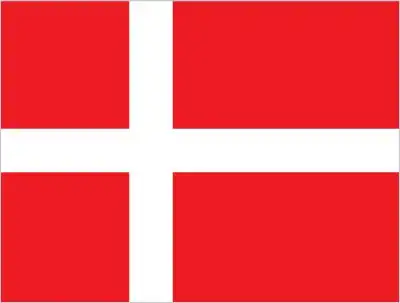
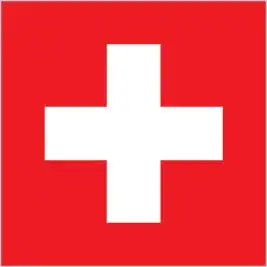
Denmark and Switzerland both fly red flags with white crosses, making them easy to confuse at a glance. However, the cross designs are fundamentally different: Denmark uses the elongated Scandinavian Cross (shifted toward the hoist), while Switzerland uses a bold, symmetric Greek cross centered on a square flag. Both are among the oldest flag designs still in use.
Key Differences
- Denmark's cross extends to the edges and is shifted left (Scandinavian Cross); Switzerland's is a thick symmetric cross centered on the flag.
- Switzerland's flag is square, one of only two square national flags (with Vatican City); Denmark's is rectangular (28:37).
- Denmark's cross is thinner; Switzerland's cross arms are one-sixth longer than they are wide.
- Denmark's design dates to 1219; Switzerland's cross was used from the 14th century but the flag was standardized in 1841.
Similarities
- Both feature a white cross on a red background.
- Both are among the oldest flag designs in the world.
- Both crosses have become iconic national symbols beyond the flag itself.
- The red color represents courage/sacrifice in both traditions.
Why Do Denmark and Switzerland Flags Look So Similar?
Both flags have medieval origins rooted in Christian symbolism, the cross representing Christianity and the crusading tradition. Denmark's Dannebrog (the oldest continuously used national flag) legend says it fell from the sky during the Battle of Lyndanisse in 1219. Switzerland's white cross was used by Swiss soldiers from the 14th century to identify each other in battle. Despite both using a white cross on red, the designs evolved independently in different parts of Europe.
History of the Danish Flag
The Dannebrog is the oldest continuously used national flag in the world. Legend says it descended from the sky on June 15, 1219, during the Battle of Lyndanisse in Estonia, rallying Danish troops to victory. Historical records confirm its use from at least the 14th century. The Scandinavian Cross design it popularized was later adopted by Sweden, Norway, Finland, and Iceland.
History of the Swiss Flag
The white cross has been used as a Swiss military symbol since the Battle of Laupen in 1339. The federal flag was officially established in 1841, though the cross had been used on cantonal war banners for centuries. Switzerland's flag is one of only two square sovereign-state flags (the other being Vatican City). The Red Cross organization reversed Switzerland's colors (red cross on white) to honor the Swiss founder, Henry Dunant.
Color Comparison
Denmark Flag Colors
Switzerland Flag Colors
Fun Facts
- The Dannebrog (Danish flag) is officially the oldest national flag still in use, dating to 1219.
- Switzerland's square flag is one of only two square national flags in the world (the other is Vatican City).
- The Red Cross symbol is the Swiss flag with colors inverted, a tribute to its Swiss founder, Henry Dunant.
- Tonga's flag is also a red flag with a white cross, but with a red cross inside the white cross in the canton.
- Denmark's flag inspired all five Nordic cross flags used across Scandinavia.
Frequently Asked Questions
Why do Denmark and Switzerland flags look alike?
Both flags have medieval origins rooted in Christian symbolism, the cross representing Christianity and the crusading tradition. Denmark's Dannebrog (the oldest continuously used national flag) legend says it fell from the sky during the Battle of Lyndanisse in 1219. Switzerland's white cross was used by Swiss soldiers from the 14th century to identify each other in battle. Despite both using a white cross on red, the designs evolved independently in different parts of Europe.
What is the difference between the Denmark and Switzerland flag?
- Denmark's cross extends to the edges and is shifted left (Scandinavian Cross); Switzerland's is a thick symmetric cross centered on the flag.
- Switzerland's flag is square, one of only two square national flags (with Vatican City); Denmark's is rectangular (28:37).
- Denmark's cross is thinner; Switzerland's cross arms are one-sixth longer than they are wide.
- Denmark's design dates to 1219; Switzerland's cross was used from the 14th century but the flag was standardized in 1841.
Are the Denmark and Switzerland flags the same?
No, while they look very similar, the flags of Denmark and Switzerland have distinct differences. Denmark's cross extends to the edges and is shifted left (Scandinavian Cross); Switzerland's is a thick symmetric cross centered on the flag.
Can You Tell Them Apart?
Test your flag knowledge with our interactive quiz!
Play Flag Quiz →Other Similar Flags
Norway vs Iceland
Norway and Iceland flags share the Scandinavian Cross design with reversed colors. Compare the red-blue and blue-red designs, history, and meaning.
Chad vs Romania
Chad and Romania have nearly identical flags: blue, yellow, and red vertical stripes. Discover the differences, history, and why they look so alike.
Australia vs New Zealand
Australia and New Zealand flags both feature the Union Jack and Southern Cross on a blue background. Compare the key differences, history, and symbolism.
Further reading on Wikipedia: Dannebrog, Flag of Switzerland