Norway vs Iceland Flag
By Mohamadou Moctar · Last updated
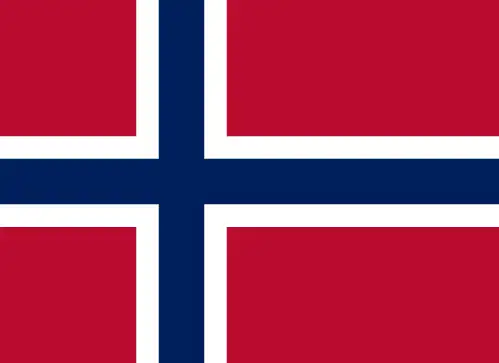
Norway and Iceland's flags are essentially color-swapped versions of each other. Both use the distinctive Scandinavian Cross (Nordic Cross) design, but with reversed color schemes. Norway features a blue cross on a red background, while Iceland has a red cross on a blue background. Both designs trace their heritage to the Danish flag, the oldest continuously used national flag.

Key Differences
- Norway has a red background with a blue (white-bordered) cross; Iceland has a blue background with a red (white-bordered) cross.
- Norway's flag was adopted in 1821, Iceland's in 1915 (official use from 1944).
- Norway's red represents hardiness and bravery, Iceland's blue represents the Atlantic Ocean and mountains.
- The proportions differ slightly: Norway's ratio is 8:11, Iceland's is 18:25.
Similarities
- Both use the Scandinavian (Nordic) Cross shifted to the hoist side.
- Both use red, white, and blue.
- Both derived their design tradition from the Danish flag (Dannebrog).
- The white fimbriation (border) on the cross is identical in style.
Why Do Norway and Iceland Flags Look So Similar?
Both flags are part of the Nordic Cross flag family, which originated with Denmark's Dannebrog, the oldest national flag design still in use (dating to at least 1219). Norway, formerly in union with Denmark and then Sweden, adopted its flag in 1821 by adding a blue cross to the existing red-and-white Danish pattern. Iceland, which was a Danish territory until 1944, designed its flag in 1915 using the same Nordic Cross but with reversed colors, a blue field and a red cross, to represent its landscapes of fire (volcanoes) and ice (glaciers).
History of the Norwegian Flag
Norway's flag was designed by Fredrik Meltzer in 1821, during the union with Sweden. Meltzer combined the red-and-white Danish cross (representing Norway's historical ties to Denmark) with a blue cross within it (inspired by the French and American flags' colors of liberty). It was fully independent as the sole national flag from 1898.
History of the Icelandic Flag
Iceland's flag was designed by Matthías Þórðarson and adopted by law on June 17, 1915. It was first flown officially on December 1, 1918, when Iceland became a sovereign state in personal union with Denmark. It became the flag of the fully independent Republic of Iceland on June 17, 1944. The blue represents the mountains and Atlantic Ocean, the white represents ice and snow, and the red represents volcanic fire.
Color Comparison
Norway Flag Colors
Iceland Flag Colors
Fun Facts
- Denmark's Dannebrog (the parent design) is the oldest continuously used national flag, dating to at least 1219.
- All five Nordic countries (Denmark, Sweden, Norway, Finland, Iceland) use the Scandinavian Cross design.
- Iceland's flag day is June 17, which is also their Independence Day and the birthday of Jón Sigurðsson, their independence hero.
- A quick way to remember: Norway = 'N' for navy-blue cross on red; Iceland = 'I' for icy-blue background.
Frequently Asked Questions
Why do Norway and Iceland flags look alike?
Both flags are part of the Nordic Cross flag family, which originated with Denmark's Dannebrog, the oldest national flag design still in use (dating to at least 1219). Norway, formerly in union with Denmark and then Sweden, adopted its flag in 1821 by adding a blue cross to the existing red-and-white Danish pattern. Iceland, which was a Danish territory until 1944, designed its flag in 1915 using the same Nordic Cross but with reversed colors, a blue field and a red cross, to represent its landscapes of fire (volcanoes) and ice (glaciers).
What is the difference between the Norway and Iceland flag?
- Norway has a red background with a blue (white-bordered) cross; Iceland has a blue background with a red (white-bordered) cross.
- Norway's flag was adopted in 1821, Iceland's in 1915 (official use from 1944).
- Norway's red represents hardiness and bravery, Iceland's blue represents the Atlantic Ocean and mountains.
- The proportions differ slightly: Norway's ratio is 8:11, Iceland's is 18:25.
Are the Norway and Iceland flags the same?
No, while they look very similar, the flags of Norway and Iceland have distinct differences. Norway has a red background with a blue (white-bordered) cross; Iceland has a blue background with a red (white-bordered) cross.
Can You Tell Them Apart?
Test your flag knowledge with our interactive quiz!
Play Flag Quiz →Other Similar Flags
Australia vs New Zealand
Australia and New Zealand flags both feature the Union Jack and Southern Cross on a blue background. Compare the key differences, history, and symbolism.
Netherlands vs Luxembourg
The Netherlands and Luxembourg flags both have red, white, and blue horizontal stripes. Learn how to tell them apart and their different origins.
Chad vs Romania
Chad and Romania have nearly identical flags: blue, yellow, and red vertical stripes. Discover the differences, history, and why they look so alike.
Further reading on Wikipedia: Flag of Norway, Flag of Iceland