Liechtenstein vs Haiti Flag
The flags of Liechtenstein and Haiti share one of the most famous coincidences in vexillology. Until 1937, both nations used a simple horizontal bicolor of blue over red, with no central emblem. The two flags were so similar that, at the 1936 Berlin Summer Olympics, athletes and officials from both countries were stunned to discover their national banners were virtually identical. That moment of awkward recognition prompted Liechtenstein to add a gold princely crown to the upper hoist of its flag the following year, finally distinguishing the two. The story is one of the clearest examples in modern flag history of why even small alpine principalities pay attention to international flag protocol.
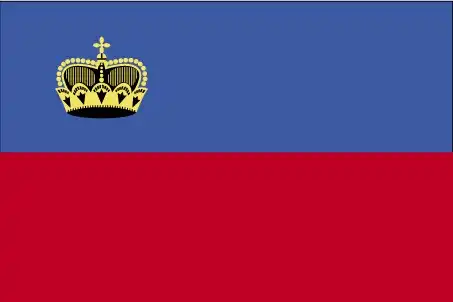
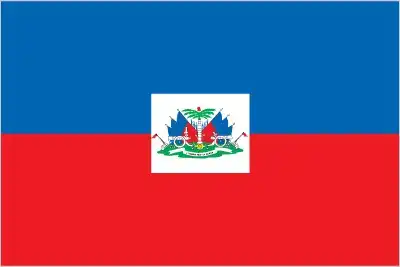
Key Differences
- Liechtenstein's flag has a gold princely crown in the upper hoist (canton); Haiti's flag has Haiti's coat of arms in the center.
- Haiti's flag uses a darker, navy blue while Liechtenstein's blue is a lighter, brighter cobalt-style blue.
- Haiti's red is a brighter scarlet, while Liechtenstein's red leans slightly deeper.
- Liechtenstein's crown sits off-center on the hoist side; Haiti's emblem is centered.
- Liechtenstein's flag has a 3:5 ratio; Haiti's is 3:5 as well, but Haiti also has a separate civil flag without the coat of arms (just blue over red).
Similarities
- Both flags consist of two equal horizontal bands: blue on top, red on bottom.
- Both adopted the blue-over-red horizontal bicolor in the 19th or early 20th century.
- Without their respective central emblems, both flags would be visually identical.
- Both countries continue to use the blue-red palette as core national colors.
Why Do Liechtenstein and Haiti Flags Look So Similar?
The similarity is purely coincidental. Haiti's flag traces to the revolution led by Jean-Jacques Dessalines in 1803, when (according to tradition) the white stripe was torn out of the French Tricolore, and the remaining blue and red bands were rearranged horizontally. Liechtenstein's blue-and-red flag dates to the early 18th century and reflects the household colors associated with the princely court — blue for the sky and red for the evening fires lit in the homes of Liechtensteiners. Neither country drew inspiration from the other; they simply settled on the same minimal horizontal bicolor by independent paths. The 1936 Olympics confrontation revealed the issue, and Liechtenstein added the crown in 1937 specifically to remove the ambiguity.
History of the Liechtenstein Flag
Liechtenstein's blue-red flag has been used in some form since the early 1700s, when the colors became associated with the princely household. It was officially adopted in 1921 in the new constitution. After the 1936 Berlin Olympics revealed that Haiti used essentially the same flag, the principality amended its flag law on June 24, 1937, adding a gold princely crown (Fürstenhut) to the upper hoist. The crown also signals that Liechtenstein is a monarchy, distinguishing it ideologically as well as visually from the republican Haitian flag.
History of the Haitian Flag
Haiti's flag was created on May 18, 1803, at the Congress of Arcahaie during the Haitian Revolution. According to tradition, Jean-Jacques Dessalines tore the white stripe from a French Tricolore, symbolically removing white European rule, and stitched the remaining blue and red panels together. Originally vertical, the flag was rearranged into horizontal bands. After several variants under empire and kingdom, the modern blue-over-red horizontal flag with the central coat of arms was readopted in 1986 after the fall of the Duvalier regime, restoring the design used between 1859 and 1964.
Color Comparison
Liechtenstein Flag Colors
Haiti Flag Colors
Fun Facts
- Until the 1936 Olympics, neither Liechtenstein nor Haiti realized their flags were nearly identical.
- Liechtenstein's princely crown was specifically added to fix the resemblance — making this one of the few flags ever modified directly because of another country's flag.
- Haiti was the first country to gain independence as a result of a successful slave revolt (1804).
- Liechtenstein is one of only two doubly landlocked countries in the world (along with Uzbekistan).
- Haiti's coat of arms features a palm tree topped with a Phrygian cap of liberty — a classic French Revolutionary symbol.
Frequently Asked Questions
Why do Liechtenstein and Haiti flags look alike?
The similarity is purely coincidental. Haiti's flag traces to the revolution led by Jean-Jacques Dessalines in 1803, when (according to tradition) the white stripe was torn out of the French Tricolore, and the remaining blue and red bands were rearranged horizontally. Liechtenstein's blue-and-red flag dates to the early 18th century and reflects the household colors associated with the princely court — blue for the sky and red for the evening fires lit in the homes of Liechtensteiners. Neither country drew inspiration from the other; they simply settled on the same minimal horizontal bicolor by independent paths. The 1936 Olympics confrontation revealed the issue, and Liechtenstein added the crown in 1937 specifically to remove the ambiguity.
What is the difference between the Liechtenstein and Haiti flag?
- Liechtenstein's flag has a gold princely crown in the upper hoist (canton); Haiti's flag has Haiti's coat of arms in the center.
- Haiti's flag uses a darker, navy blue while Liechtenstein's blue is a lighter, brighter cobalt-style blue.
- Haiti's red is a brighter scarlet, while Liechtenstein's red leans slightly deeper.
- Liechtenstein's crown sits off-center on the hoist side; Haiti's emblem is centered.
- Liechtenstein's flag has a 3:5 ratio; Haiti's is 3:5 as well, but Haiti also has a separate civil flag without the coat of arms (just blue over red).
Are the Liechtenstein and Haiti flags the same?
No, while they look very similar, the flags of Liechtenstein and Haiti have distinct differences. Liechtenstein's flag has a gold princely crown in the upper hoist (canton); Haiti's flag has Haiti's coat of arms in the center.
Can You Tell Them Apart?
Test your flag knowledge with our interactive quiz!
Play Flag Quiz →Other Similar Flags
Chad vs Romania
Chad and Romania have nearly identical flags — both feature blue, yellow, and red vertical stripes. Discover the differences, history, and why they look so alike.
Monaco vs Bahrain
Monaco, Bahrain, and Qatar flags all use red and white in minimalist designs. Compare these three flags — from European royalty to Gulf heritage — and learn how to tell them apart.
Indonesia vs Monaco
Indonesia and Monaco flags are nearly identical — red over white horizontal stripes. Learn the key differences in dimensions, history, and meaning.