Lithuania vs Bolivia Flag
By Mohamadou Moctar · Last updated
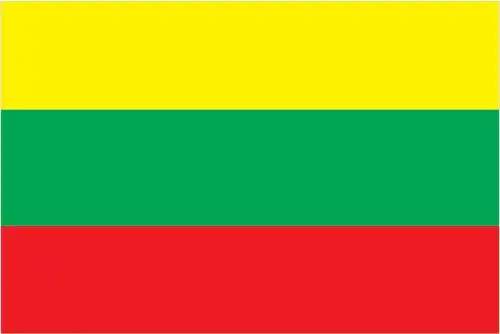
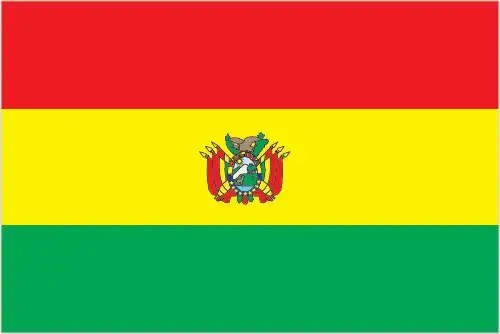
Lithuania and Bolivia's flags are surprisingly similar despite the two countries being on opposite sides of the world with no historical connection. Both feature horizontal stripes of yellow (gold), green, and red, though in different arrangements. Lithuania's order is yellow-green-red (top to bottom), while Bolivia's is red-yellow-green. At a glance or from a distance, they can be easily confused.
Key Differences
- Lithuania's stripe order is yellow-green-red (top to bottom); Bolivia's is red-yellow-green.
- Bolivia often displays its flag with the coat of arms in the center (the state flag); Lithuania's is always plain.
- Lithuania's flag ratio is 3:5; Bolivia's is 15:22.
- Lithuania's flag dates to 1918; Bolivia's to 1851.
- The shades differ: Lithuania uses a brighter, more golden yellow; Bolivia's yellow is slightly darker.
Similarities
- Both use yellow/gold, green, and red horizontal stripes.
- Both flags use three equal-width stripes.
- Both flags lack any emblem on the civil flag version.
- The colors represent similar themes: land, sacrifice, and natural resources.
Why Do Lithuania and Bolivia Flags Look So Similar?
The similarity is entirely coincidental. Lithuania's yellow-green-red was chosen in 1918 to represent the country's natural landscape: yellow for the golden wheat fields, green for the forests and countryside, and red for the blood shed for Lithuanian independence. Bolivia's red-yellow-green was adopted in 1851, with red representing the bravery of Bolivian soldiers, yellow for the nation's mineral wealth, and green for the fertility of the land. Both countries independently chose colors reflecting their geography and values, arriving at nearly the same palette by chance.
History of the Lithuanian Flag
Lithuania's tricolor was first adopted on April 25, 1918, shortly after declaring independence from Russia and Germany. The colors were chosen to reflect Lithuania's natural beauty: golden fields, green forests, and the red blood of patriots. During Soviet occupation (1940–1990), the flag was banned and replaced with the Soviet Lithuanian flag. The tricolor was restored on March 20, 1989, during the independence movement, and became official again when Lithuania regained independence on March 11, 1990.
History of the Bolivian Flag
Bolivia's flag was adopted on October 31, 1851, under President Manuel Isidoro Belzu. Bolivia has had several flag designs since independence in 1825. The current red-yellow-green tricolor replaced earlier versions. The state flag (used by the government) includes the Bolivian coat of arms in the center, featuring a condor, a mountain (Cerro Potosí), and an alpaca. The Wiphala, a square rainbow-checkered flag representing indigenous peoples, was designated as a dual national emblem alongside the tricolor in 2009.
Color Comparison
Lithuania Flag Colors
Bolivia Flag Colors
Fun Facts
- Lithuania's flag was banned for 50 years during Soviet occupation. Displaying it was punishable by imprisonment or exile to Siberia.
- Bolivia is one of the few countries with two official national flags: the tricolor and the Wiphala (a rainbow checkered flag).
- Ethiopia's green-yellow-red flag inspired the Pan-African color scheme, adding another set of similar flags to the mix.
- If you rotate Lithuania's flag 180°, the stripe order becomes red–green–yellow, still different from Bolivia's red–yellow–green, but using the same three colors.
- Ghana, Guinea, and Mali also use similar color combinations, making this one of the most confusing flag color sets globally.
Frequently Asked Questions
Why do Lithuania and Bolivia flags look alike?
The similarity is entirely coincidental. Lithuania's yellow-green-red was chosen in 1918 to represent the country's natural landscape: yellow for the golden wheat fields, green for the forests and countryside, and red for the blood shed for Lithuanian independence. Bolivia's red-yellow-green was adopted in 1851, with red representing the bravery of Bolivian soldiers, yellow for the nation's mineral wealth, and green for the fertility of the land. Both countries independently chose colors reflecting their geography and values, arriving at nearly the same palette by chance.
What is the difference between the Lithuania and Bolivia flag?
- Lithuania's stripe order is yellow-green-red (top to bottom); Bolivia's is red-yellow-green.
- Bolivia often displays its flag with the coat of arms in the center (the state flag); Lithuania's is always plain.
- Lithuania's flag ratio is 3:5; Bolivia's is 15:22.
- Lithuania's flag dates to 1918; Bolivia's to 1851.
- The shades differ: Lithuania uses a brighter, more golden yellow; Bolivia's yellow is slightly darker.
Are the Lithuania and Bolivia flags the same?
No, while they look very similar, the flags of Lithuania and Bolivia have distinct differences. Lithuania's stripe order is yellow-green-red (top to bottom); Bolivia's is red-yellow-green.
Can You Tell Them Apart?
Test your flag knowledge with our interactive quiz!
Play Flag Quiz →Other Similar Flags
Chad vs Romania
Chad and Romania have nearly identical flags: blue, yellow, and red vertical stripes. Discover the differences, history, and why they look so alike.
Senegal vs Mali
Senegal and Mali flags share the same green-yellow-red vertical stripes. The only difference? Senegal has a green star. Compare their history and symbolism.
Ireland vs Côte d'Ivoire
Ireland and Ivory Coast (Côte d'Ivoire) flags both feature green, white, and orange vertical stripes, but reversed. Learn the differences and history.
Further reading on Wikipedia: Flag of Lithuania, Flag of Bolivia