New Zealand vs Australia vs Fiji vs Tuvalu Flag
By Mohamadou Moctar · Last updated
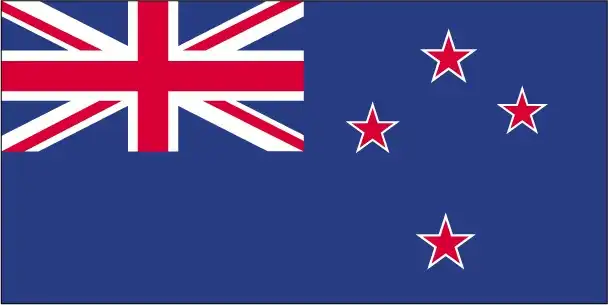
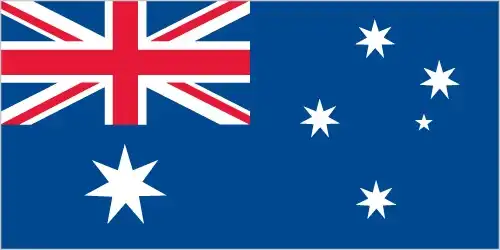
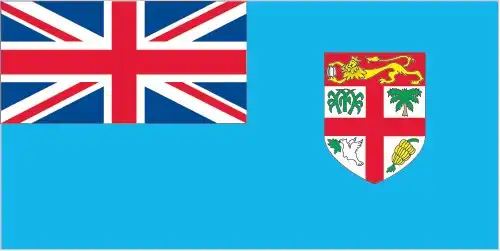
New Zealand, Australia, Fiji, and Tuvalu form a family of Pacific Blue Ensign flags, all featuring the British Union Jack in the canton (upper-left corner) on a blue background. This shared design reflects their common history as British colonies or territories in the Pacific. While Australia and New Zealand feature the Southern Cross constellation, Fiji displays its coat of arms, and Tuvalu shows its island chain pattern. From a distance, these flags can be remarkably difficult to distinguish.
Key Differences
- Australia has 6 stars (Southern Cross + Commonwealth Star); New Zealand has 4 red stars with white borders; Fiji has its coat of arms; Tuvalu has 9 yellow stars representing its islands.
- Fiji uses a light blue (cyan) background instead of the dark navy/royal blue used by Australia and New Zealand.
- Tuvalu's stars are arranged in a geographic pattern matching the actual positions of its nine islands.
- Australia has a large seven-pointed Commonwealth Star below the Union Jack, unique among all four flags.
- Fiji's coat of arms features a lion, sugar cane, coconut palm, bananas, and a dove. It is the most detailed emblem of the four.
Similarities
- All four feature the British Union Jack in the upper-left canton.
- All four use a blue background (varying shades).
- All four are current or former British colonial territories in the Pacific.
- All four have debated changing their flags to more distinctive designs.
Why Do New Zealand and Australia Flags Look So Similar?
All four flags are based on the British Blue Ensign, the standard template for British colonies and territories. When each nation gained independence or self-governance, they retained the Blue Ensign format while adding distinctive national symbols. Australia (1901) and New Zealand (1902) chose the Southern Cross. Fiji (1970) added its coat of arms upon independence. Tuvalu (1978) initially adopted a different flag but returned to the Blue Ensign design in 1997 after a public vote. The persistence of the Union Jack reflects ongoing ties to the Commonwealth, though all four countries have debated adopting entirely new flag designs.
History of the New Zealand Flag
New Zealand's flag was adopted on March 24, 1902. The four red stars with white borders represent the Southern Cross constellation, symbolizing New Zealand's location in the South Pacific. In 2015–2016, a national referendum was held on whether to change the flag to a silver fern design. The existing flag won with 56.6% of the vote, making New Zealand the most recent country to formally vote on keeping its Blue Ensign design.
History of the Australian Flag
Australia's flag was chosen through a public design competition in 1901 with over 32,000 entries. It features the Union Jack, the Commonwealth Star (seven points representing the six states plus territories), and the Southern Cross with white stars. The flag became formally recognized by the Flags Act 1953. Debate about changing the flag, particularly to remove the Union Jack, resurfaces periodically, especially during republican discussions.
History of the Fijian Flag
Fiji's flag was adopted on October 10, 1970, the day Fiji gained independence from Britain. The light blue background distinguishes it from the darker blue of Australia and New Zealand, representing the Pacific Ocean that is central to Fijian life. The coat of arms on the fly side features English imagery (a lion holding a cocoa pod) alongside Fijian agricultural symbols (sugar cane, coconut palm, bananas) and a dove of peace. In 2015, Fiji's government announced plans to change the flag but the proposal was eventually shelved. Tuvalu's flag, adopted in its current form in 1997, features nine yellow stars arranged to mirror the geographic layout of Tuvalu's nine islands, making it the most geographically literal flag design in this family.
Color Comparison
New Zealand Flag Colors
Australia Flag Colors
Fiji Flag Colors
Fun Facts
- New Zealand spent $26 million NZD on its 2015–2016 flag referendum and voted to keep the existing design.
- Tuvalu briefly changed its flag in 1995 to remove the Union Jack, but public demand brought back the Blue Ensign design in 1997.
- There are at least 15 current or former Blue Ensign flags worldwide, from the British Virgin Islands to Montserrat.
- Fiji's lighter blue is the easiest way to distinguish it from Australia and New Zealand at a glance.
- At the 2000 Sydney Olympics, New Zealand's flag was accidentally replaced with Australia's during a medal ceremony, proving even organizers confuse them.
Frequently Asked Questions
Why do New Zealand and Australia flags look alike?
All four flags are based on the British Blue Ensign, the standard template for British colonies and territories. When each nation gained independence or self-governance, they retained the Blue Ensign format while adding distinctive national symbols. Australia (1901) and New Zealand (1902) chose the Southern Cross. Fiji (1970) added its coat of arms upon independence. Tuvalu (1978) initially adopted a different flag but returned to the Blue Ensign design in 1997 after a public vote. The persistence of the Union Jack reflects ongoing ties to the Commonwealth, though all four countries have debated adopting entirely new flag designs.
What is the difference between the New Zealand and Australia flag?
- Australia has 6 stars (Southern Cross + Commonwealth Star); New Zealand has 4 red stars with white borders; Fiji has its coat of arms; Tuvalu has 9 yellow stars representing its islands.
- Fiji uses a light blue (cyan) background instead of the dark navy/royal blue used by Australia and New Zealand.
- Tuvalu's stars are arranged in a geographic pattern matching the actual positions of its nine islands.
- Australia has a large seven-pointed Commonwealth Star below the Union Jack, unique among all four flags.
- Fiji's coat of arms features a lion, sugar cane, coconut palm, bananas, and a dove. It is the most detailed emblem of the four.
Are the New Zealand and Australia flags the same?
No, while they look very similar, the flags of New Zealand and Australia have distinct differences. Australia has 6 stars (Southern Cross + Commonwealth Star); New Zealand has 4 red stars with white borders; Fiji has its coat of arms; Tuvalu has 9 yellow stars representing its islands.
Can You Tell Them Apart?
Test your flag knowledge with our interactive quiz!
Play Flag Quiz →Other Similar Flags
Australia vs New Zealand
Australia and New Zealand flags both feature the Union Jack and Southern Cross on a blue background. Compare the key differences, history, and symbolism.
Chad vs Romania
Chad and Romania have nearly identical flags: blue, yellow, and red vertical stripes. Discover the differences, history, and why they look so alike.
Indonesia vs Monaco
Indonesia and Monaco flags are nearly identical: red over white horizontal stripes. Learn the key differences in dimensions, history, and meaning.
Further reading on Wikipedia: Flag of New Zealand, Flag of Australia, Flag of Fiji