Austria vs Latvia vs Lebanon Flag: Red-White-Red Patterns
By Mohamadou Moctar · Last updated
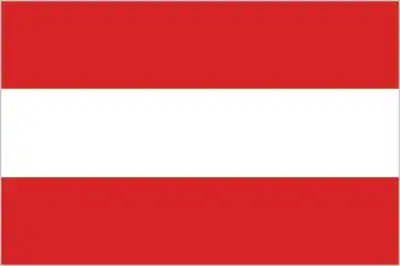
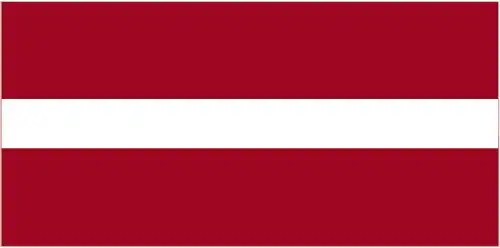
Austria, Latvia, and Lebanon all share a red-white-red horizontal stripe pattern, a surprisingly rare design that links two European nations with a Middle Eastern one. Austria and Latvia both use plain red-white-red tricolors (with different shades and proportions), while Lebanon adds its iconic green Cedar of Lebanon to the white center stripe. From a distance, Austria and Latvia's flags are particularly easy to confuse.

Key Differences
- Austria uses a brighter red; Latvia uses a distinctive dark carmine (maroon-ish) red.
- Lebanon has the green Cedar of Lebanon emblem centered on the white stripe; Austria and Latvia are plain.
- Austria's stripes are equal width; Latvia's white stripe is narrower (the ratio of red:white:red is 2:1:2).
- Austria's flag dates to the 13th century (one of the oldest); Latvia's to 1280; Lebanon's to 1943.
- Austria's ratio is 2:3; Latvia's is 1:2; Lebanon's is 2:3.
Similarities
- All three feature red-white-red horizontal stripe patterns.
- All three use red as the dominant color.
- White represents peace or purity in all three traditions.
- All three have flags with ancient or deeply historical roots.
Why Do Austria and Latvia Flags Look So Similar?
The similarity is coincidental across all three nations. Austria's red-white-red legend dates to the Siege of Acre (1191) during the Third Crusade, where Duke Leopold V's white surcoat was soaked in blood except where his belt protected it. Latvia's flag is one of the oldest in the world (referenced in 1280) and features a unique dark carmine red. Lebanon's red-white-red was chosen at independence in 1943 to represent the blood shed for liberation (red) and peace (white), with the cedar added as the national symbol.
History of the Austrian Flag
Austria's flag is one of the oldest national flags in the world. According to legend, Duke Leopold V of Austria's white surcoat was completely soaked in blood during the Siege of Acre in 1191, except for a white stripe where his belt had been, creating the red-white-red pattern. Historical records confirm the red-white-red shield was used from 1230. The flag was officially adopted in its current form on May 1, 1945, after the fall of Nazi Germany.
History of the Latvian Flag
Latvia's flag is referenced in the Livonian Rhymed Chronicle from around 1280, making it one of the oldest flags in the world. According to legend, a Latvian tribe leader was wounded in battle and carried on a white sheet, which was stained red by his blood except for the center where he lay. The flag was officially adopted on June 15, 1921, banned during Soviet occupation (1940–1991), and restored on February 27, 1990. Its distinctive dark carmine red sets it apart from other red-and-white flags.
History of the Lebanese Flag
Lebanon's flag was adopted on December 7, 1943, upon independence from France. The red-white-red stripes were chosen to represent sacrifice and peace. The green Cedar of Lebanon in the center is the country's most iconic symbol, referenced in the Bible and used for millennia. The cedar appears on Lebanon's coat of arms, currency, and national airline. The design was created to unify Lebanon's diverse religious communities under a single national symbol.
Color Comparison
Austria Flag Colors
Latvia Flag Colors
Lebanon Flag Colors
Fun Facts
- Both Austria and Latvia claim their flags originated from blood-on-white-cloth legends during medieval battles.
- Latvia's flag is referenced in a 1280 chronicle, making it possibly the oldest flag design still in use, even older than Denmark's Dannebrog.
- The Cedar of Lebanon is one of the most recognizable national symbols in the world. It appears on everything from the national airline to the country's currency.
- Austria's blood-on-surcoat legend from 1191 is one of the most famous flag origin stories in history, though historians debate its accuracy.
- Peru's flag is also red-white-red, adding another member to this unexpected flag family.
Frequently Asked Questions
Why do Austria and Latvia flags look alike?
The similarity is coincidental across all three nations. Austria's red-white-red legend dates to the Siege of Acre (1191) during the Third Crusade, where Duke Leopold V's white surcoat was soaked in blood except where his belt protected it. Latvia's flag is one of the oldest in the world (referenced in 1280) and features a unique dark carmine red. Lebanon's red-white-red was chosen at independence in 1943 to represent the blood shed for liberation (red) and peace (white), with the cedar added as the national symbol.
What is the difference between the Austria and Latvia flag?
- Austria uses a brighter red; Latvia uses a distinctive dark carmine (maroon-ish) red.
- Lebanon has the green Cedar of Lebanon emblem centered on the white stripe; Austria and Latvia are plain.
- Austria's stripes are equal width; Latvia's white stripe is narrower (the ratio of red:white:red is 2:1:2).
- Austria's flag dates to the 13th century (one of the oldest); Latvia's to 1280; Lebanon's to 1943.
- Austria's ratio is 2:3; Latvia's is 1:2; Lebanon's is 2:3.
Are the Austria and Latvia flags the same?
No, while they look very similar, the flags of Austria and Latvia have distinct differences. Austria uses a brighter red; Latvia uses a distinctive dark carmine (maroon-ish) red.
Can You Tell Them Apart?
Test your flag knowledge with our interactive quiz!
Play Flag Quiz →Other Similar Flags
Chad vs Romania
Chad and Romania have nearly identical flags: blue, yellow, and red vertical stripes. Discover the differences, history, and why they look so alike.
Indonesia vs Monaco
Indonesia and Monaco flags are nearly identical: red over white horizontal stripes. Learn the key differences in dimensions, history, and meaning.
Hungary vs Bulgaria
Hungary and Bulgaria flags both feature red, white, and green horizontal stripes in different orders. Compare their designs, history, and symbolism.
Further reading on Wikipedia: Flag of Austria, Flag of Latvia, Flag of Lebanon