China vs Japan Flag
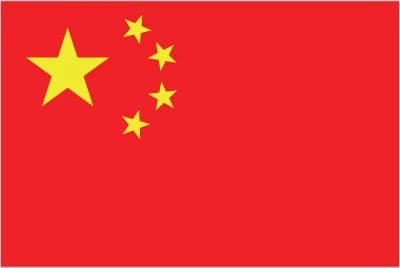
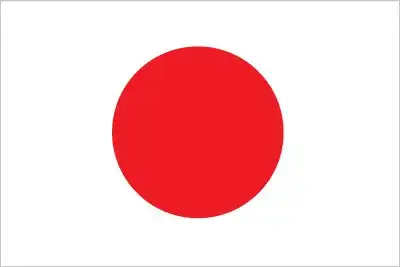
The flags of China and Japan are two of the most recognizable national symbols in East Asia. They are visually very different: China's flag is the Five-Star Red Flag, with a large gold star surrounded by four smaller gold stars on a red field, adopted in 1949. Japan's flag is the Hinomaru ('circle of the sun'), a single red disc on a white field, formally adopted in 1870 as a merchant ensign and made the official national flag in 1999. Despite their differences, the two flags are searched for together because both are deeply tied to East Asian identity and frequently appear in news, sports, and trade contexts.
Key Differences
- China's flag is mostly red with five gold stars; Japan's flag is mostly white with a single red disc.
- China's stars are arranged in the upper-left canton; Japan's red disc is centered.
- China's flag uses red and gold; Japan's flag uses red and white.
- China's flag was adopted on October 1, 1949; Japan's Hinomaru design dates to the late 19th century but was only made the official national flag by law in 1999.
- China's flag has a 2:3 aspect ratio; Japan's flag has a 2:3 ratio with the disc set slightly toward the hoist (although the modern law specifies it centered).
- China's flag is busy with five stars; Japan's flag is famously minimalist with a single circular shape.
Similarities
- Both flags use red as a primary color.
- Both flags are highly recognizable East Asian national symbols.
- Both flags have remained essentially unchanged since their modern adoption.
- Both flags are governed by formal national flag laws.
- Both flags use bold, simple geometric shapes (stars and a disc) rather than complex emblems or coats of arms.
Why Do China and Japan Flags Look So Similar?
These flags are searched for together because China and Japan are the two largest economies in East Asia and constantly appear in regional comparisons — economic, political, cultural, and historical. They are often shown side by side in trade summits, sports broadcasts, and international news coverage. Although the designs are very different (busy stars vs single disc), both rely on a strong primary motif on a single-color field, which makes them visually compatible when displayed together. The shared use of red also gives the two flags a similar immediate impression even though the underlying symbolism is entirely separate.
History of the Chinese Flag
China's Five-Star Red Flag was designed by Zeng Liansong, a Shanghai economist, and chosen from over 3,000 submissions in a 1949 nationwide competition. The flag was officially raised on October 1, 1949, in Tiananmen Square at the founding of the People's Republic of China. The large star represents the Chinese Communist Party, and the four smaller stars originally represented the four social classes referenced in Mao's writings of that era. The flag has been continuously used since 1949.
History of the Japanese Flag
Japan's red sun disc on white has been used as a national symbol for over a millennium, with origins traced to the imperial court and the Buddhist sun-disc iconography of the Asuka period. The Hinomaru as a flag was used by samurai warlords in the 16th century. It was formally adopted as Japan's merchant ensign on February 27, 1870, during the Meiji Restoration. The Hinomaru flew during Japan's modernization, military expansion, postwar reconstruction, and economic boom. It was finally codified in law as the official national flag on August 13, 1999, by the Act on National Flag and Anthem.
Color Comparison
China Flag Colors
Japan Flag Colors
Fun Facts
- Japan's name 'Nihon' or 'Nippon' literally means 'origin of the sun' — the sun disc on the flag is a direct visual reference.
- Until 1999, Japan's Hinomaru was used as a de facto national flag for over a century without ever being legally codified.
- China's red color has dual cultural meaning: traditional Chinese auspiciousness and the modern political symbolism of revolution.
- Japan's red disc was historically positioned slightly toward the hoist; the 1999 law standardized the disc as exactly centered.
- Both flags were used aboard early space missions of their respective countries — China via the Shenzhou program, Japan via JAXA satellites.
Frequently Asked Questions
Why do China and Japan flags look alike?
These flags are searched for together because China and Japan are the two largest economies in East Asia and constantly appear in regional comparisons — economic, political, cultural, and historical. They are often shown side by side in trade summits, sports broadcasts, and international news coverage. Although the designs are very different (busy stars vs single disc), both rely on a strong primary motif on a single-color field, which makes them visually compatible when displayed together. The shared use of red also gives the two flags a similar immediate impression even though the underlying symbolism is entirely separate.
What is the difference between the China and Japan flag?
- China's flag is mostly red with five gold stars; Japan's flag is mostly white with a single red disc.
- China's stars are arranged in the upper-left canton; Japan's red disc is centered.
- China's flag uses red and gold; Japan's flag uses red and white.
- China's flag was adopted on October 1, 1949; Japan's Hinomaru design dates to the late 19th century but was only made the official national flag by law in 1999.
- China's flag has a 2:3 aspect ratio; Japan's flag has a 2:3 ratio with the disc set slightly toward the hoist (although the modern law specifies it centered).
- China's flag is busy with five stars; Japan's flag is famously minimalist with a single circular shape.
Are the China and Japan flags the same?
No, while they look very similar, the flags of China and Japan have distinct differences. China's flag is mostly red with five gold stars; Japan's flag is mostly white with a single red disc.
Can You Tell Them Apart?
Test your flag knowledge with our interactive quiz!
Play Flag Quiz →Other Similar Flags
China vs Vietnam
China and Vietnam flags both feature yellow stars on a red background. Discover the key differences in star count, design, and the communist heritage behind both flags.
North Korea vs South Korea
North Korea and South Korea flags look completely different despite sharing a peninsula. Compare the communist red star design with the Taegukgi's yin-yang and trigrams.
Japan vs Bangladesh
Japan and Bangladesh flags both feature a circle on a solid background — red on white and red on green. Compare their design, symbolism, and history.