Egypt vs Iraq vs Syria Flag
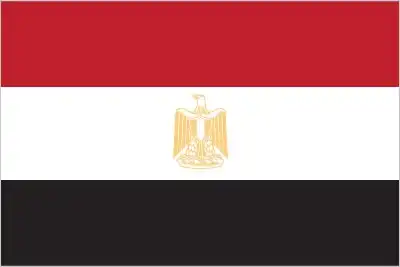
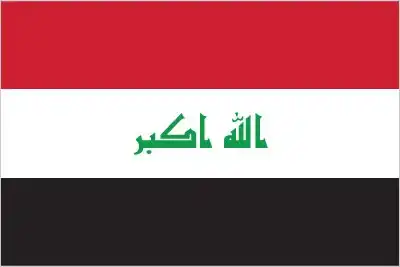
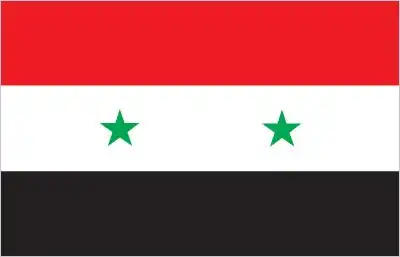
The flags of Egypt, Iraq, and Syria look remarkably alike at a glance: all three feature three equal horizontal stripes of red, white, and black, and all three carry distinctive emblems on the white middle stripe. They belong to a wider family of Pan-Arab flags inspired by the colors of the Arab Revolt of 1916. Egypt's flag carries the gold Eagle of Saladin, Iraq's bears the green takbir (Arabic phrase) without any star or emblem outside the script, and Syria's includes two green stars in the central white band. Telling them apart requires looking past the stripe order to the central element — and once you know what to look for, the differences are unmistakable.
Key Differences
- Egypt features the gold Eagle of Saladin centered on the white stripe; Iraq and Syria do not have an animal emblem.
- Iraq's white stripe carries the green Arabic phrase 'Allahu Akbar' in Kufic script and no stars; Syria's white stripe has two green five-pointed stars and no script.
- Syria's stripe colors are red-white-black; Iraq's are red-white-black; Egypt's are also red-white-black — but the central elements differ entirely.
- Egypt's flag was last redesigned in 1984; Iraq's current form dates to 2008; Syria's design has been used in multiple periods, most recently readopted in 1980.
- All three are 2:3 ratio, but the visual weight of each emblem differs: Egypt's eagle dominates, Iraq's script spans most of the stripe, Syria's two stars are smaller and balanced.
Similarities
- All three use the same Pan-Arab horizontal tricolor: red on top, white in the middle, black on the bottom.
- All three flags include green as a secondary color through their central emblems.
- All three trace their color scheme to the Arab Revolt flag of 1916.
- All three have used variants of the United Arab Republic flag (1958–1961) at some point.
- All three currently have a 2:3 aspect ratio.
Why Do Egypt and Iraq Flags Look So Similar?
The shared tricolor is a deliberate political symbol, not a coincidence. The colors come from the so-called Pan-Arab colors, a phrase often attributed to the 14th-century Arab poet Safi al-Din al-Hilli: 'White are our deeds, black are our battles, green are our fields, red are our swords.' The modern Pan-Arab flag — black, white, green, and red — was first flown by the Arab Revolt against the Ottoman Empire in 1916. After the Egyptian Revolution of 1952, Egypt adopted a red-white-black tricolor with a gold Eagle of Saladin as a republican Pan-Arab symbol. In 1958, Egypt and Syria merged into the United Arab Republic and used a flag with two green stars on the white stripe. When the union dissolved in 1961, both countries kept versions of that flag — Syria continuing with the two-star design and Egypt later replacing the stars with the eagle. Iraq adopted a similar flag in 1963 under a Ba'athist government and revised it in 1991 and again in 2008, when the current Kufic-script version was finalized. The three flags are therefore visual cousins, all expressing the same broader Pan-Arab tradition.
History of the Egyptian Flag
Egypt's modern flag was adopted on October 4, 1984. After the 1952 revolution that overthrew the monarchy, Egypt used a red-white-black tricolor with a green eagle and stars referencing the Arab Liberation Flag. During the 1958–1961 United Arab Republic with Syria, two green stars appeared on the white stripe. After the union dissolved, Egypt restored a national flag, replacing the stars eventually with the gold Eagle of Saladin — a heraldic device tied to the 12th-century Ayyubid sultan Saladin. The current eagle, holding a scroll bearing the country's name in Arabic, has been in use since 1984.
History of the Iraqi Flag
Iraq's current flag dates to 2008, but its red-white-black tricolor goes back to 1963, when the Ba'athist government adopted a flag with three green stars on the white stripe to represent hopes for political union with Egypt and Syria. In 1991, the green Arabic phrase 'Allahu Akbar' (commonly translated as 'God is greatest') was added between the stars, reportedly in former president Saddam Hussein's own handwriting. After the 2003 invasion, this script was kept but rewritten in formal Kufic script in 2008, and the three stars were removed. The current flag is the result of multiple post-2003 redesigns and parliamentary debates.
History of the Syrian Flag
Syria's flag was originally adopted in 1958 as the flag of the United Arab Republic, the union between Egypt and Syria. When the UAR dissolved in 1961, Syria initially returned to an earlier green-white-black flag but readopted the UAR-style design (red-white-black with two green stars) in 1980. The two stars originally represented the union of Egypt and Syria; after the UAR ended, they were reinterpreted to represent Egypt and Syria as historic Arab republics or, in some readings, the dual goals of unity and freedom. The flag has continued to be associated with the Ba'athist government era of Syrian history.
Color Comparison
Egypt Flag Colors
Iraq Flag Colors
Syria Flag Colors
Fun Facts
- The Eagle of Saladin on Egypt's flag was reportedly modeled on a stone carving discovered on the wall of the Cairo Citadel built by Saladin in the 12th century.
- Iraq's 1991-era 'Allahu Akbar' script was widely reported to be in Saddam Hussein's own handwriting; in 2008, parliament replaced it with a more neutral Kufic script.
- Yemen's flag (red-white-black with no emblem) is the simplest member of the Pan-Arab tricolor family.
- Sudan's flag is the same red-white-black tricolor but adds a green triangle on the hoist side.
- All four Arab Revolt colors — black, white, green, and red — appear together on the flags of Jordan, Palestine, Western Sahara, and the United Arab Emirates.
Frequently Asked Questions
Why do Egypt and Iraq flags look alike?
The shared tricolor is a deliberate political symbol, not a coincidence. The colors come from the so-called Pan-Arab colors, a phrase often attributed to the 14th-century Arab poet Safi al-Din al-Hilli: 'White are our deeds, black are our battles, green are our fields, red are our swords.' The modern Pan-Arab flag — black, white, green, and red — was first flown by the Arab Revolt against the Ottoman Empire in 1916. After the Egyptian Revolution of 1952, Egypt adopted a red-white-black tricolor with a gold Eagle of Saladin as a republican Pan-Arab symbol. In 1958, Egypt and Syria merged into the United Arab Republic and used a flag with two green stars on the white stripe. When the union dissolved in 1961, both countries kept versions of that flag — Syria continuing with the two-star design and Egypt later replacing the stars with the eagle. Iraq adopted a similar flag in 1963 under a Ba'athist government and revised it in 1991 and again in 2008, when the current Kufic-script version was finalized. The three flags are therefore visual cousins, all expressing the same broader Pan-Arab tradition.
What is the difference between the Egypt and Iraq flag?
- Egypt features the gold Eagle of Saladin centered on the white stripe; Iraq and Syria do not have an animal emblem.
- Iraq's white stripe carries the green Arabic phrase 'Allahu Akbar' in Kufic script and no stars; Syria's white stripe has two green five-pointed stars and no script.
- Syria's stripe colors are red-white-black; Iraq's are red-white-black; Egypt's are also red-white-black — but the central elements differ entirely.
- Egypt's flag was last redesigned in 1984; Iraq's current form dates to 2008; Syria's design has been used in multiple periods, most recently readopted in 1980.
- All three are 2:3 ratio, but the visual weight of each emblem differs: Egypt's eagle dominates, Iraq's script spans most of the stripe, Syria's two stars are smaller and balanced.
Are the Egypt and Iraq flags the same?
No, while they look very similar, the flags of Egypt and Iraq have distinct differences. Egypt features the gold Eagle of Saladin centered on the white stripe; Iraq and Syria do not have an animal emblem.
Can You Tell Them Apart?
Test your flag knowledge with our interactive quiz!
Play Flag Quiz →Other Similar Flags
China vs Vietnam
China and Vietnam flags both feature yellow stars on a red background. Discover the key differences in star count, design, and the communist heritage behind both flags.
Morocco vs Vietnam
Morocco and Vietnam flags both feature a star on a solid colored background — red with a green star vs red with a yellow star. Compare their designs, history, and symbolism.
Saudi Arabia vs Iran
Saudi Arabia and Iran both feature green flags with Arabic-script inscriptions. Compare their designs, calligraphy, and color symbolism.