Saudi Arabia vs Iran Flag
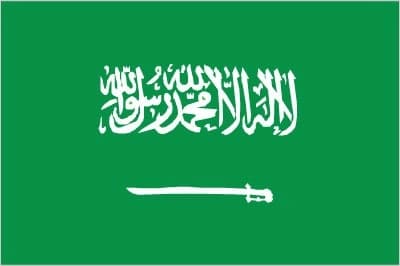
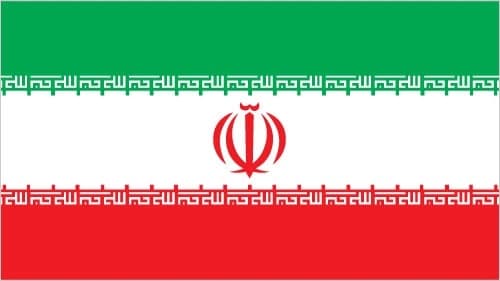
Saudi Arabia and Iran both have flags that prominently feature green and contain Arabic-script inscriptions, which can lead casual viewers to lump them together. In reality, the two designs differ significantly: Saudi Arabia's flag is solid green with the Islamic shahada in white Thuluth calligraphy and a horizontal sword beneath; Iran's flag is a horizontal tricolor of green, white, and red with a stylized red Persian-script emblem in the center and Kufic Arabic inscriptions running along the borders of the green and red bands. They share a color, an alphabet, and a regional context — but their layouts, symbolism, and design vocabulary are distinct. This comparison focuses purely on flag design, calligraphy, and history.
Key Differences
- Saudi Arabia's flag is a single solid green field; Iran's flag is a horizontal tricolor of green, white, and red.
- Saudi Arabia's flag features the Islamic shahada (declaration of faith) and a horizontal sword in white; Iran's central emblem is a red stylized symbol designed in 1980, not a textual inscription.
- Iran's flag carries 22 repetitions of the takbir phrase along the borders of the green and red stripes — Saudi Arabia's flag has no repeated border script.
- Saudi Arabia uses Thuluth calligraphy; Iran's border inscriptions are in a stylized Kufic script.
- Saudi Arabia's flag is intentionally never flown at half-mast or printed on disposable items because it bears the shahada; Iran's flag has no such religious-text restriction.
- Saudi Arabia's flag has a 2:3 ratio with the script and sword reading correctly on both sides (it is a two-sided flag); Iran's flag is also 4:7 ratio with symmetric text that can be read from either side.
Similarities
- Both flags use green as a primary color, a color long associated with Islam.
- Both flags feature Arabic script as a central design element.
- Both flags have specific religious significance encoded in their design.
- Both flags require careful handling under their national flag laws.
- Both flags have aspect ratios in the same general range (2:3 and 4:7).
Why Do Saudi Arabia and Iran Flags Look So Similar?
People often search for these two flags together because both belong to large Muslim-majority countries with politically significant green flags that include Arabic script. The shared use of green reflects an old association in Islamic art and heraldry, where green has appeared on banners since the early caliphates and was the favored color of the Fatimid dynasty. Arabic script is a natural vehicle for ideological inscriptions in both countries, since Arabic is a sacred language in Islam (even though Iran's everyday language is Persian, its religious inscriptions remain in Arabic). The visual similarity ends there: Saudi Arabia uses a single green field as the entire backdrop for the shahada and sword, while Iran uses the broader Pan-Iranian green-white-red palette inherited from earlier Iranian flags going back to the 1900s. The flags are best understood as cousins within Islamic flag traditions rather than near-duplicates.
History of the Saudi Arabian Flag
Saudi Arabia's flag draws on the green banner traditions of the Najdi region of central Arabia, where the House of Saud rose to power. A green flag with a white shahada was used by various Saudi states from the early 18th century onward. The horizontal sword was added in 1902 by Abdulaziz ibn Saud, founder of modern Saudi Arabia. The current proportions and design of the flag were standardized on March 15, 1973. By Saudi flag law, the flag must never touch the ground, must never be flown at half-mast, and must always read correctly on both sides — meaning it is manufactured as a true two-sided flag with mirrored printing.
History of the Iranian Flag
Iran's modern flag was adopted on July 29, 1980, after the 1979 revolution that established the Islamic Republic. The green-white-red horizontal tricolor itself dates back to the early 20th century and was used under the Qajar and Pahlavi dynasties. The post-1980 redesign kept the tricolor but replaced the previous golden lion-and-sun emblem in the center with a stylized red emblem incorporating the word 'Allah' in Arabic, designed by Hamid Nadimi. Twenty-two repetitions of the takbir phrase 'Allahu Akbar' were added along the inner edges of the green and red stripes, commemorating the date of the revolution (22 Bahman in the Iranian calendar).
Color Comparison
Saudi Arabia Flag Colors
Iran Flag Colors
Fun Facts
- Saudi Arabia's flag is one of only a handful of national flags in the world that is manufactured with two correct-reading sides instead of being identical on both sides.
- Because the Saudi flag bears the shahada, FIFA and other international bodies have at times accommodated requests not to print the flag on items like footballs or merchandise.
- Iran's central emblem on the flag is a single stylized word — 'Allah' — designed so that when you turn the symbol on its side, it reads as the word and shows four crescents and a sword.
- The number 22 on Iran's flag (11 takbir phrases on each of the green and red borders) refers to the 22nd day of Bahman in the Iranian calendar — the day the 1979 revolution succeeded.
- Both countries use the color green for very different reasons: in Saudi Arabia it ties to the Najdi heritage of the House of Saud; in Iran it has long been associated with Iranian national identity even before the Islamic Republic.
Frequently Asked Questions
Why do Saudi Arabia and Iran flags look alike?
People often search for these two flags together because both belong to large Muslim-majority countries with politically significant green flags that include Arabic script. The shared use of green reflects an old association in Islamic art and heraldry, where green has appeared on banners since the early caliphates and was the favored color of the Fatimid dynasty. Arabic script is a natural vehicle for ideological inscriptions in both countries, since Arabic is a sacred language in Islam (even though Iran's everyday language is Persian, its religious inscriptions remain in Arabic). The visual similarity ends there: Saudi Arabia uses a single green field as the entire backdrop for the shahada and sword, while Iran uses the broader Pan-Iranian green-white-red palette inherited from earlier Iranian flags going back to the 1900s. The flags are best understood as cousins within Islamic flag traditions rather than near-duplicates.
What is the difference between the Saudi Arabia and Iran flag?
- Saudi Arabia's flag is a single solid green field; Iran's flag is a horizontal tricolor of green, white, and red.
- Saudi Arabia's flag features the Islamic shahada (declaration of faith) and a horizontal sword in white; Iran's central emblem is a red stylized symbol designed in 1980, not a textual inscription.
- Iran's flag carries 22 repetitions of the takbir phrase along the borders of the green and red stripes — Saudi Arabia's flag has no repeated border script.
- Saudi Arabia uses Thuluth calligraphy; Iran's border inscriptions are in a stylized Kufic script.
- Saudi Arabia's flag is intentionally never flown at half-mast or printed on disposable items because it bears the shahada; Iran's flag has no such religious-text restriction.
- Saudi Arabia's flag has a 2:3 ratio with the script and sword reading correctly on both sides (it is a two-sided flag); Iran's flag is also 4:7 ratio with symmetric text that can be read from either side.
Are the Saudi Arabia and Iran flags the same?
No, while they look very similar, the flags of Saudi Arabia and Iran have distinct differences. Saudi Arabia's flag is a single solid green field; Iran's flag is a horizontal tricolor of green, white, and red.
Can You Tell Them Apart?
Test your flag knowledge with our interactive quiz!
Play Flag Quiz →Other Similar Flags
Egypt vs Iraq
Egypt, Iraq, and Syria share Pan-Arab red-white-black tricolors with central emblems. Compare their flags, eagles, stars, and Arabic script.
Pakistan vs Turkey
Pakistan and Turkey flags both feature a white crescent and star — Pakistan on green, Turkey on red. Compare their Islamic symbolism, design differences, and history.
Morocco vs Vietnam
Morocco and Vietnam flags both feature a star on a solid colored background — red with a green star vs red with a yellow star. Compare their designs, history, and symbolism.