Estonia vs Hungary Flag
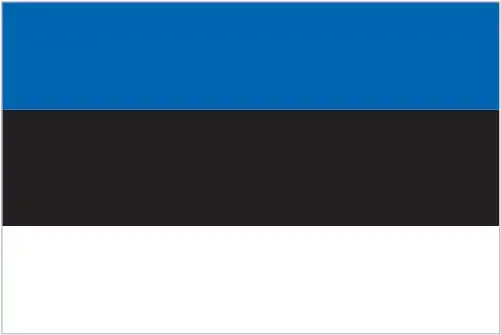
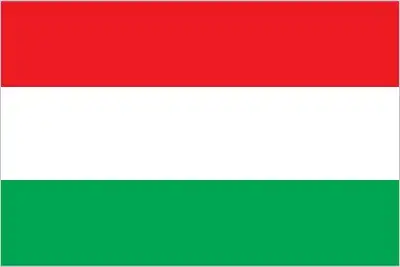
Estonia and Hungary both fly horizontal tricolor flags with three equal stripes, no emblem, and a similar overall feel — three calm horizontal bands in a colored / white / colored order. The colors themselves are completely different: Estonia uses blue, black, and white, while Hungary uses red, white, and green. But because they share that stripe layout and similar proportions, they are sometimes lumped together in lists of European tricolors. Both reflect 19th-century national awakenings in Central and Eastern Europe, when small nations under larger empires turned to flag design as a way of claiming a distinct identity.
Key Differences
- Estonia's stripes are blue, black, and white (top to bottom); Hungary's are red, white, and green (top to bottom).
- Estonia uses black as a stripe — one of very few European flags to do so; Hungary does not.
- Estonia's blue is a distinctive sky blue; Hungary's red and green are deeper, more saturated tones.
- Estonia's flag has a 7:11 aspect ratio; Hungary's is 1:2.
- Estonia's tricolor was first adopted in 1918 (banned 1940–1990, restored 1990); Hungary's tricolor traces back to the 1848 Revolution and has been in continuous use since 1957 in its current form.
Similarities
- Both are horizontal tricolors with three equal-width stripes.
- Neither flag carries any coat of arms, seal, or emblem.
- Both originated as symbols of 19th-century national awakenings in Central/Eastern Europe.
- Both have a stripe order of dark color, white, and another color.
- Both have been suspended or modified under foreign or socialist regimes and later restored.
Why Do Estonia and Hungary Flags Look So Similar?
Although the colors differ, the format is shared because both flags emerged from the same 19th-century European wave of romantic nationalism. Across the continent, small nations under larger empires (Habsburg, Russian, Ottoman) adopted horizontal tricolors as a way of asserting distinct identity, modeled loosely on the Dutch flag of the 17th century rather than the French vertical Tricolore. Estonia's blue-black-white was first used by a student fraternity in 1881 at the University of Tartu, then expanded into a national flag during independence in 1918. Hungary's red-white-green tricolor came from the medieval coat of arms of the Kingdom of Hungary and was popularized during the 1848 Revolution against Habsburg rule. The result is two flags that look similar in format — three calm stripes, no emblem — but draw on entirely different color traditions.
History of the Estonian Flag
Estonia's blue-black-white tricolor was first consecrated on June 4, 1884, by the Estonian Students' Society in Otepää. It was officially adopted as the national flag on November 21, 1918, shortly after Estonia declared independence from Russia. The flag was banned during Soviet occupation from 1940 to 1990 and replaced with a Soviet-style red flag. The original tricolor was restored on August 7, 1990, just before Estonia regained full independence in 1991. The proportions were standardized at 7:11.
History of the Hungarian Flag
Hungary's red-white-green tricolor draws on colors from the Hungarian coat of arms used since the 13th century, where red and white came from the Árpád dynasty and green from the country's mountains. The horizontal tricolor format was inspired by the French Revolution and adopted as a national symbol during the 1848 Hungarian Revolution against the Habsburg monarchy. After the establishment of the Kingdom of Hungary, the flag underwent several variations including different coats of arms in the center. The plain tricolor without any emblem was finalized in 1957 after the Hungarian Revolution of 1956 and has remained unchanged since.
Color Comparison
Estonia Flag Colors
Hungary Flag Colors
Fun Facts
- Estonia is one of the few national flags in the world to use black as a major stripe color, alongside Germany, Belgium, and Sudan.
- Hungary's red-white-green flag predates the modern unified country — the colors appeared on royal banners as early as the 13th century.
- Estonia's flag is sometimes informally called 'sinimustvalge' — literally 'blue-black-white' run together as one word.
- Hungary's 1956 revolutionaries famously cut the communist coat of arms out of their flags, leaving holes in the white middle stripe; this 'flag with the hole' became an iconic image of resistance.
- Estonian flag etiquette requires the flag to be flown at sunrise on the first day of public flag days and lowered at sunset.
Frequently Asked Questions
Why do Estonia and Hungary flags look alike?
Although the colors differ, the format is shared because both flags emerged from the same 19th-century European wave of romantic nationalism. Across the continent, small nations under larger empires (Habsburg, Russian, Ottoman) adopted horizontal tricolors as a way of asserting distinct identity, modeled loosely on the Dutch flag of the 17th century rather than the French vertical Tricolore. Estonia's blue-black-white was first used by a student fraternity in 1881 at the University of Tartu, then expanded into a national flag during independence in 1918. Hungary's red-white-green tricolor came from the medieval coat of arms of the Kingdom of Hungary and was popularized during the 1848 Revolution against Habsburg rule. The result is two flags that look similar in format — three calm stripes, no emblem — but draw on entirely different color traditions.
What is the difference between the Estonia and Hungary flag?
- Estonia's stripes are blue, black, and white (top to bottom); Hungary's are red, white, and green (top to bottom).
- Estonia uses black as a stripe — one of very few European flags to do so; Hungary does not.
- Estonia's blue is a distinctive sky blue; Hungary's red and green are deeper, more saturated tones.
- Estonia's flag has a 7:11 aspect ratio; Hungary's is 1:2.
- Estonia's tricolor was first adopted in 1918 (banned 1940–1990, restored 1990); Hungary's tricolor traces back to the 1848 Revolution and has been in continuous use since 1957 in its current form.
Are the Estonia and Hungary flags the same?
No, while they look very similar, the flags of Estonia and Hungary have distinct differences. Estonia's stripes are blue, black, and white (top to bottom); Hungary's are red, white, and green (top to bottom).
Can You Tell Them Apart?
Test your flag knowledge with our interactive quiz!
Play Flag Quiz →Other Similar Flags
Hungary vs Bulgaria
Hungary and Bulgaria flags both feature red, white, and green horizontal stripes in different orders. Compare their designs, history, and symbolism.
Lithuania vs Bolivia
Lithuania and Bolivia flags both feature yellow, green, and red horizontal stripes — but in different orders. Compare their designs, origins, and symbolism.
Romania vs Moldova
Romania and Moldova flags are nearly identical — blue, yellow, and red vertical stripes. Moldova adds its coat of arms. Compare their shared history and differences.