USA vs China Flag
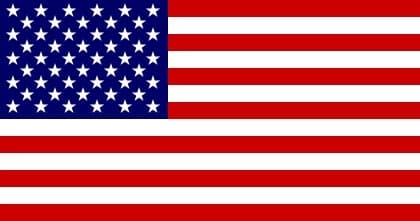
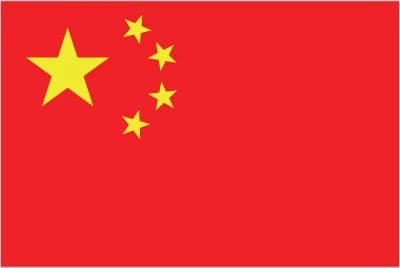
The flags of the United States and China are two of the most globally recognized national banners and represent the world's two largest economies. They share a focus on stars but in radically different design languages. The American Stars and Stripes uses 50 white stars on a blue canton with 13 alternating red and white horizontal stripes. China's Five-Star Red Flag (Wu Xing Hong Qi) is a single red field with one large gold star and four smaller gold stars in the upper-left canton. Both flags use red as a major color and stars as the central symbol, but the political meanings, design traditions, and visual feel are entirely distinct.
Key Differences
- The U.S. flag has 50 stars and 13 stripes; China's flag has 5 stars and no stripes.
- U.S. stars are white and arranged in rows; China's stars are gold/yellow with one large star surrounded by four smaller ones.
- The U.S. flag has a blue canton; China's has a fully red field with the stars in the upper-left corner.
- The U.S. flag was adopted in 1777 and modified 27 times; China's flag was adopted on October 1, 1949, and has not changed since.
- U.S. flag colors are red, white, and blue; China's are red and gold.
- The U.S. flag has a 10:19 aspect ratio; China's has a 2:3 ratio.
Similarities
- Both flags prominently feature stars as a core design element.
- Both use red as a major color (red occupies a large portion of each flag).
- Both flags symbolize the founding of a nation/state — 1776 for the U.S., 1949 for the People's Republic of China.
- Both flags are flown widely in their respective countries with formal protocols and codes of etiquette.
- Both flags have been to space and to the moon (the U.S. via Apollo, China via the Chang'e lunar program).
Why Do United States and China Flags Look So Similar?
These two flags are constantly searched for together because the United States and China are the two largest economies and most-watched superpowers in the world. They are routinely displayed side by side at G20 summits, trade negotiations, sporting events (especially the Olympics), and on news broadcasts about international relations. Although the designs are visually different, both flags rely on stars as a central motif, and both are heavily branded into national identity. Side-by-side pairings of the Stars and Stripes and the Five-Star Red Flag are among the most iconic images in 21st-century geopolitics, even as the flags themselves stem from very different design traditions.
History of the American Flag
The American flag was adopted on June 14, 1777, with 13 stars and 13 stripes for the original colonies. As states joined, stars were added (stripes locked at 13 in 1818). The current 50-star configuration was adopted July 4, 1960, after Hawaii's admission and is the longest-serving version of the flag.
History of the Chinese Flag
The flag of the People's Republic of China was designed by Zeng Liansong, an economist and amateur designer from Shanghai, and selected from over 3,000 entries in a 1949 design competition. The original design included a hammer and sickle inside the largest star, but the final version dropped them. The flag was officially raised for the first time on October 1, 1949, in Tiananmen Square as Mao Zedong proclaimed the founding of the People's Republic. The large star represents the Chinese Communist Party, and the four smaller stars originally represented the four social classes mentioned in Mao's writings of that era. The flag has been continuously used since 1949 and has never changed.
Color Comparison
United States Flag Colors
China Flag Colors
Fun Facts
- China's flag designer, Zeng Liansong, did not initially submit his own design — he reportedly drafted it under a mosquito net during summer nights of 1949.
- The U.S. flag has been to the moon six times during Apollo missions; China's flag was first 'planted' on the moon by the Chang'e 5 robotic lander in 2020.
- Both flags follow strict national protocols on display, raising, and lowering — including specific ceremonies for state mourning.
- The U.S. has 50 stars representing states; China's 4+1 star arrangement is fixed regardless of administrative changes.
- China's national flag has been consistently the same design since 1949, while the U.S. flag has changed 27 times.
Frequently Asked Questions
Why do United States and China flags look alike?
These two flags are constantly searched for together because the United States and China are the two largest economies and most-watched superpowers in the world. They are routinely displayed side by side at G20 summits, trade negotiations, sporting events (especially the Olympics), and on news broadcasts about international relations. Although the designs are visually different, both flags rely on stars as a central motif, and both are heavily branded into national identity. Side-by-side pairings of the Stars and Stripes and the Five-Star Red Flag are among the most iconic images in 21st-century geopolitics, even as the flags themselves stem from very different design traditions.
What is the difference between the United States and China flag?
- The U.S. flag has 50 stars and 13 stripes; China's flag has 5 stars and no stripes.
- U.S. stars are white and arranged in rows; China's stars are gold/yellow with one large star surrounded by four smaller ones.
- The U.S. flag has a blue canton; China's has a fully red field with the stars in the upper-left corner.
- The U.S. flag was adopted in 1777 and modified 27 times; China's flag was adopted on October 1, 1949, and has not changed since.
- U.S. flag colors are red, white, and blue; China's are red and gold.
- The U.S. flag has a 10:19 aspect ratio; China's has a 2:3 ratio.
Are the United States and China flags the same?
No, while they look very similar, the flags of United States and China have distinct differences. The U.S. flag has 50 stars and 13 stripes; China's flag has 5 stars and no stripes.
Can You Tell Them Apart?
Test your flag knowledge with our interactive quiz!
Play Flag Quiz →Other Similar Flags
China vs Vietnam
China and Vietnam flags both feature yellow stars on a red background. Discover the key differences in star count, design, and the communist heritage behind both flags.
United States vs Russia
Compare the U.S. Stars and Stripes with Russia's white-blue-red tricolor — two superpower flags with very different design heritages.
China vs Japan
Compare China's Five-Star Red Flag with Japan's Hinomaru Sun Disc — two East Asian flags with deeply different traditions.